Blogger Stylin’ Home Tours – Favorite Room Edition {Kitchen & Pantry}

Following the Blogger Stylin’ Home Tours – Favorite Room Edition? ::gasp!:: So fun! So exciting! If you love looking at ‘real’ and ‘beautiful’ and ‘inspiring’ homes then you’re going to want to catch up on the series starting with Lindsay at The White Buffalo Styling Co.

Have you just popped over from The Chronicles of Home ? Welcome, friends! I’m so happy you’re here! Come in, come in! Make yourself at home!

Favorite Room Home Tours 

It’s the next to the last stop of a week long series of beautiful homes. I wish I had some sort of grand finale of “Holy smokes! They saved the best for last!” but our home is really still such a work in progress. And then there was a bonus favorite room added after me so I’m no longer last. But don’t you just want to gather all of these pretty rooms to create one big awesome house? That’s where I’ll live. 😉 

My favorite room is almost always the room we most recently completed. Know what I mean? All of the blood, sweat, tears and labor of love, to the finishing touches and I could sit in that room for hours just soaking up the feeling of the reward of a job well done. And well, JUST DONE! Ya know?

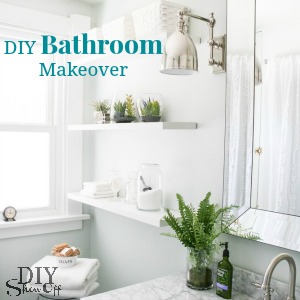
I am so SO in love with my bathroom, you guys! If you saw the ‘before’ pictures of what I lived with for so many years, you understand…now it’s just the prettiest soothing spa-like room. I’d move my bed or office in there if there was room. BUT anyway, that seems like such an odd room to choose. “Roeshel’s favorite room is the bathroom! hahahahahaha!” Ugh. 

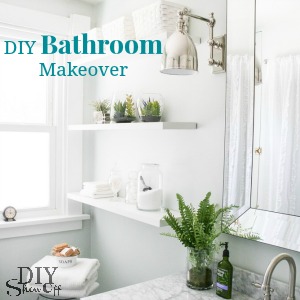
DIYShowOff Bathroom Makeover before and after

Plan B: I’ll go with our open pantry. Again, another odd choice so we’ll include the kitchen too since that makes it more like an entire room. Kitchen and pantry. It’s all related to cooking & food storage, right? Right! Ready? Let’s go!

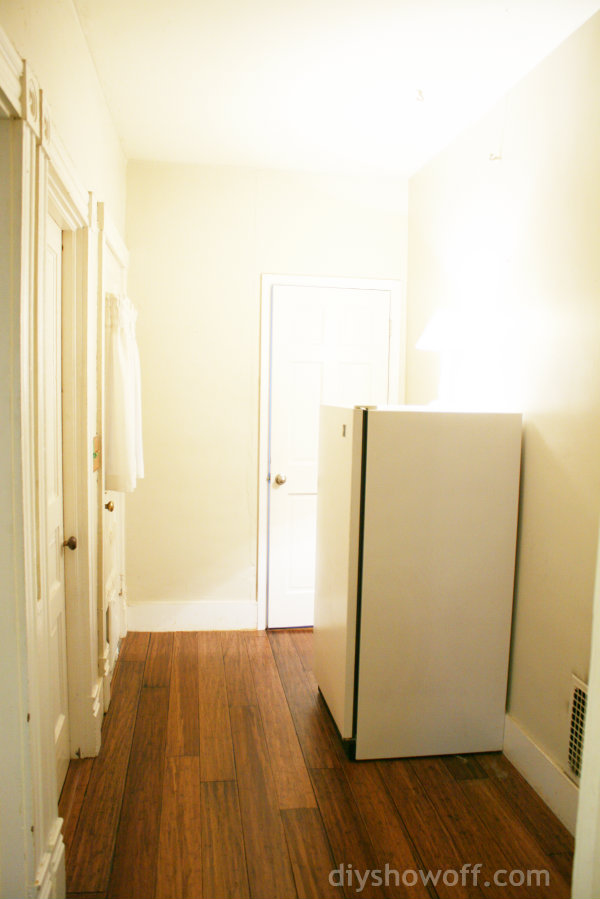
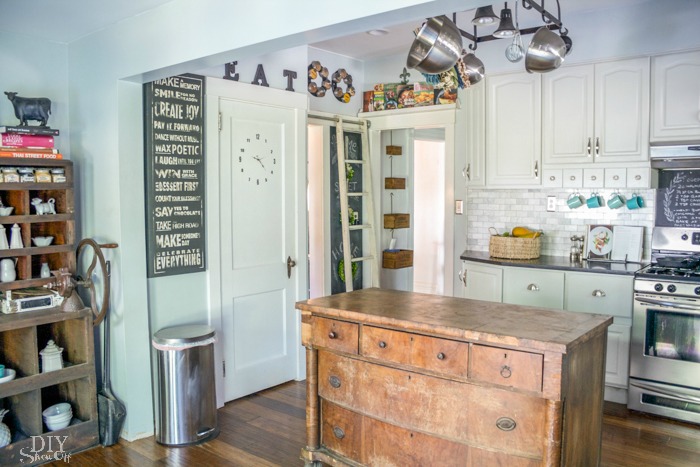
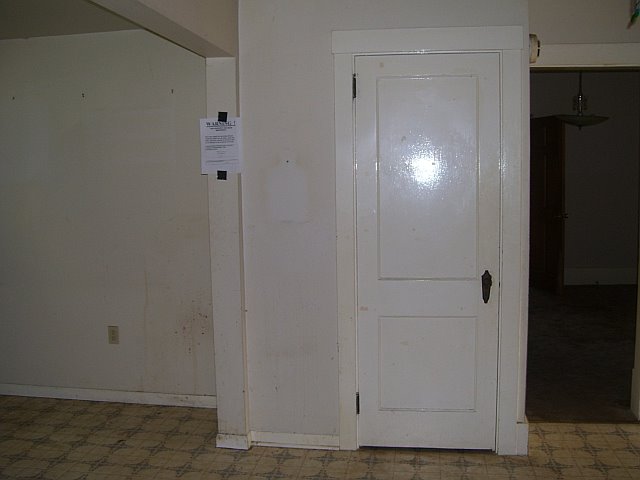
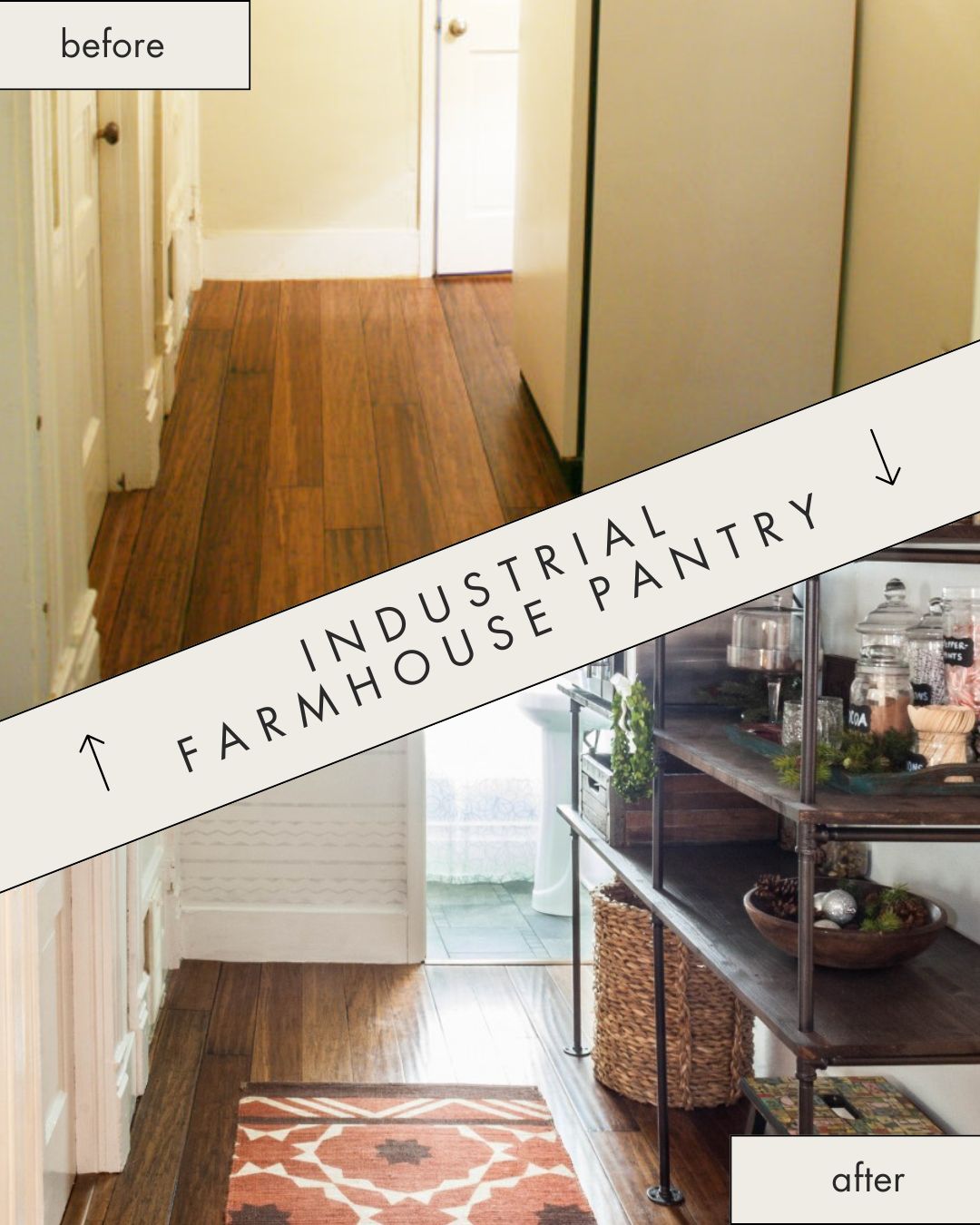
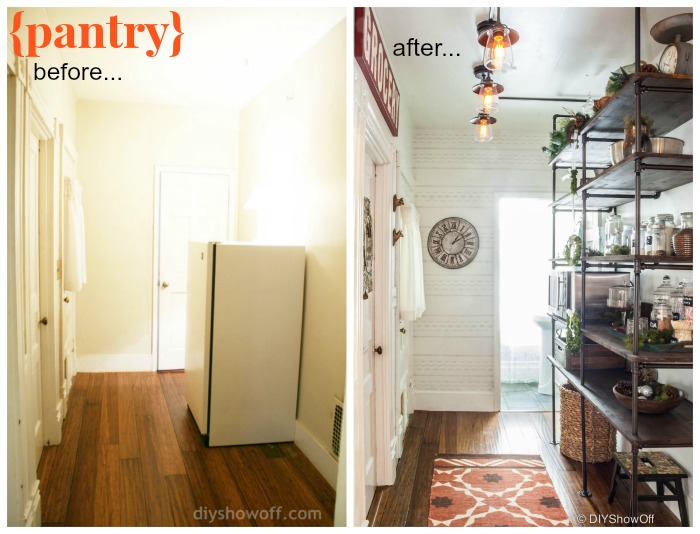
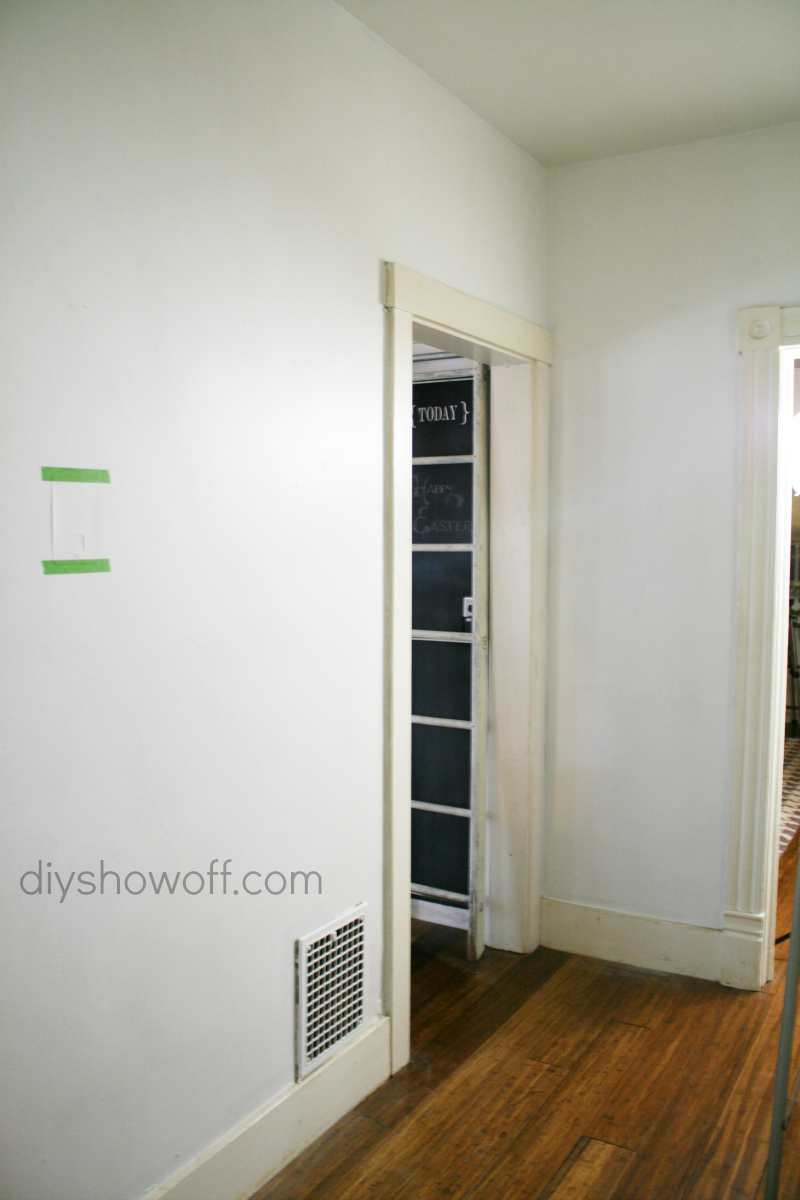
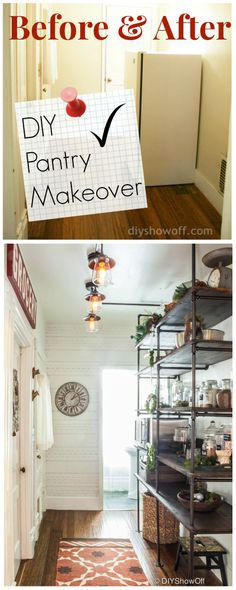
This is sort of what we had to start with (except the bamboo flooring is newer). A strange small room/hallway behind the kitchen that has SIX doorways. 

open pantry before

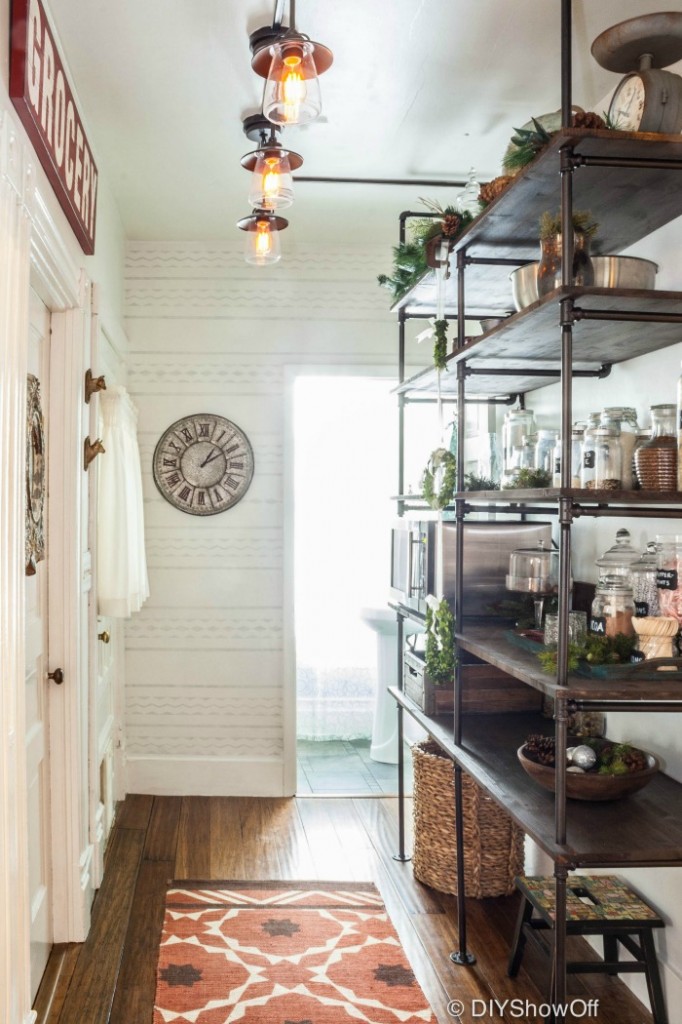
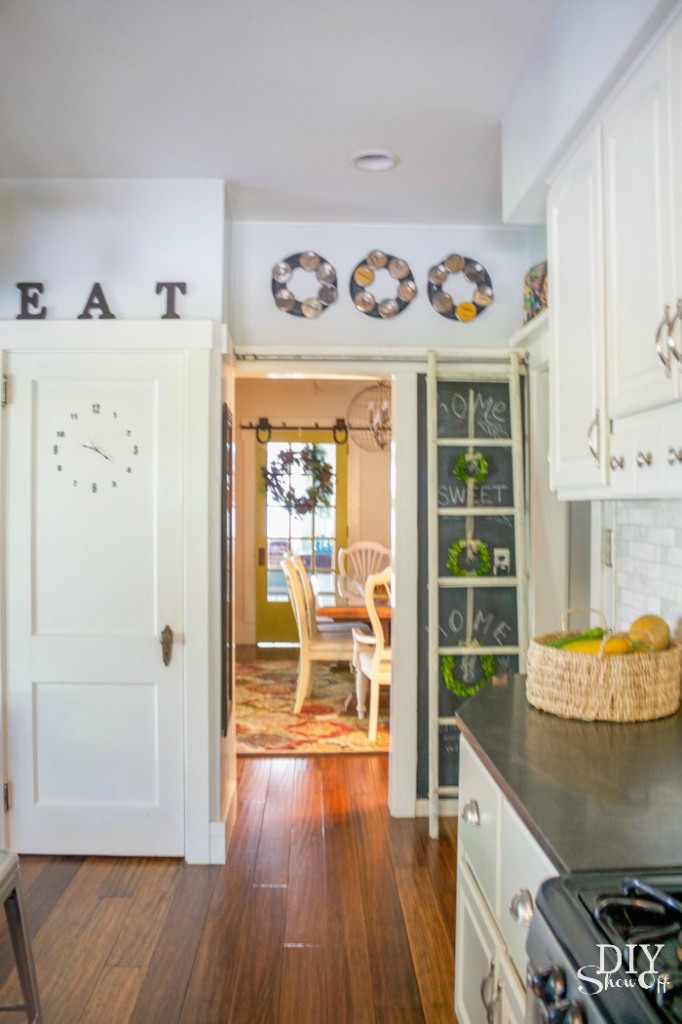
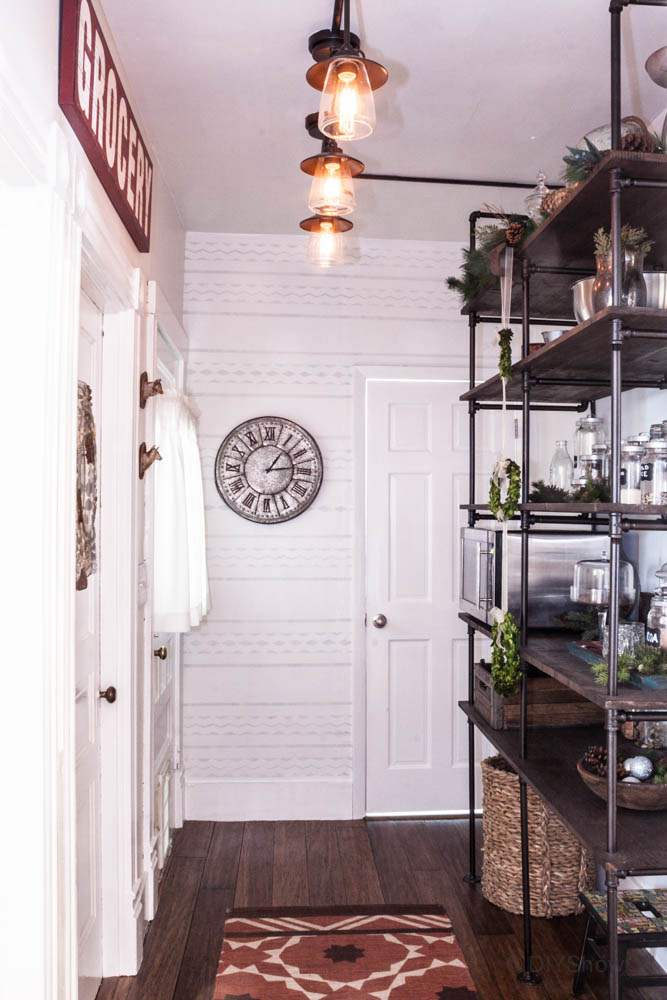
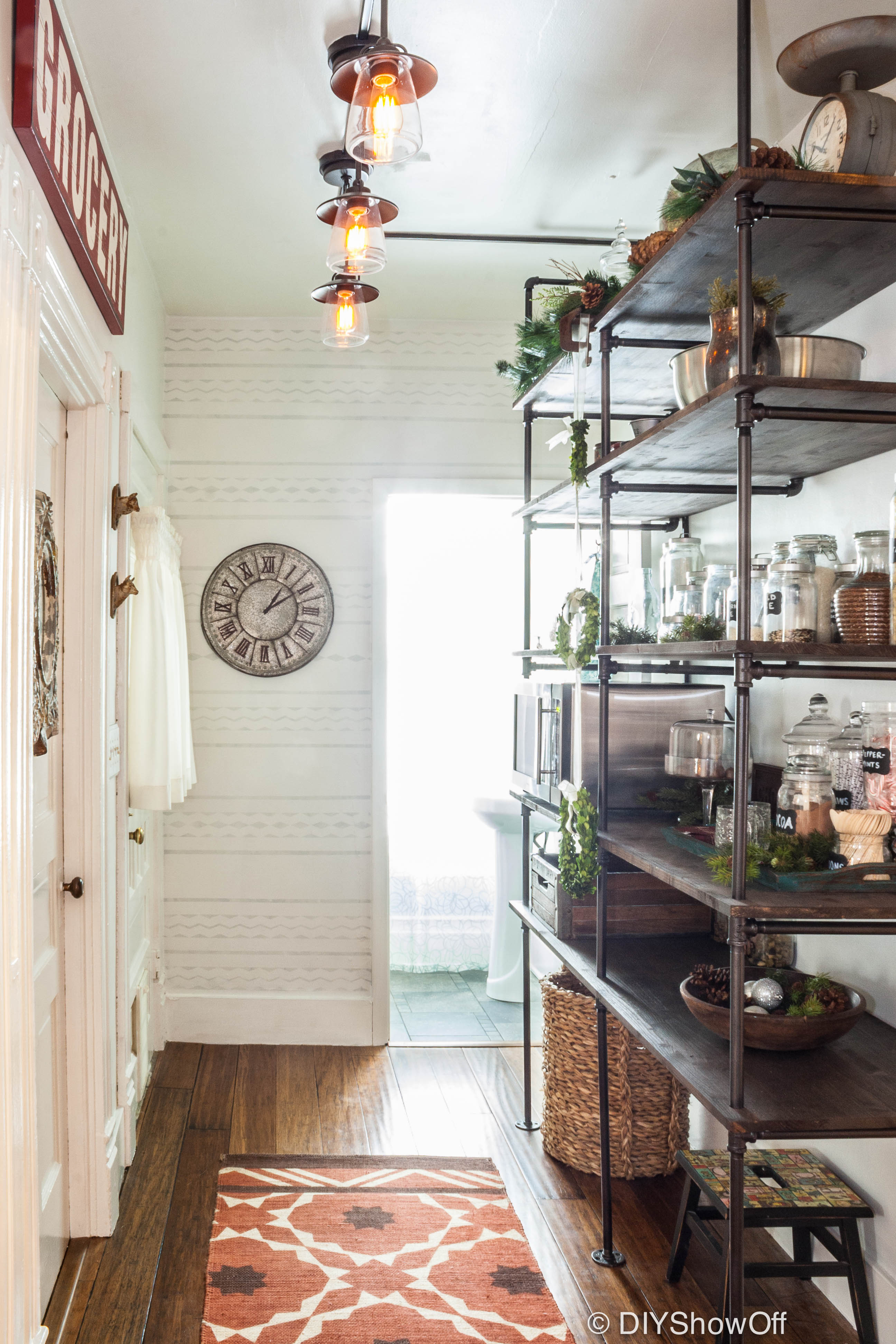
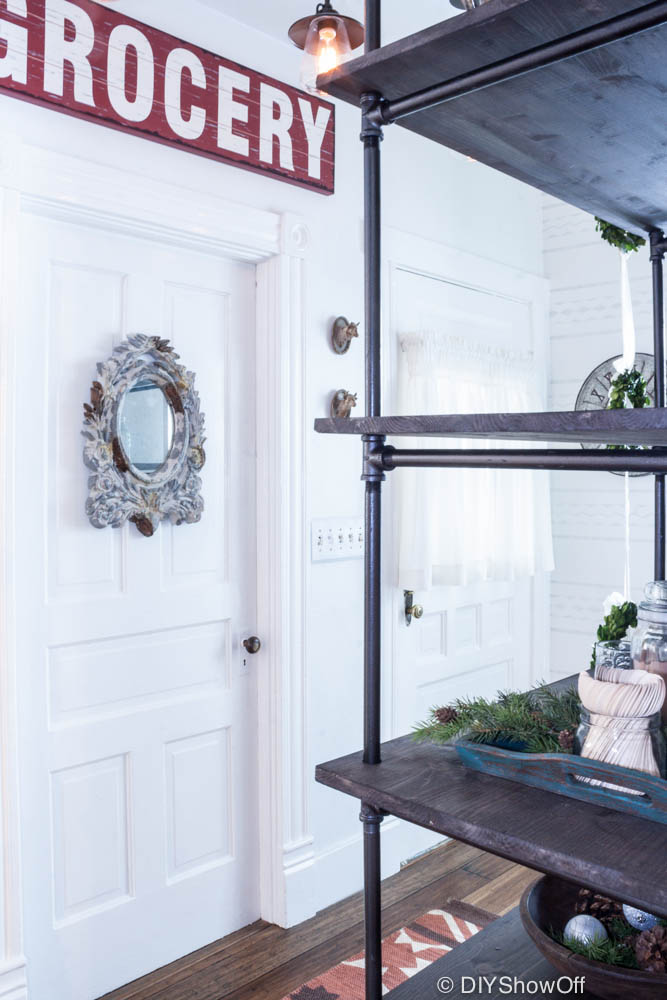
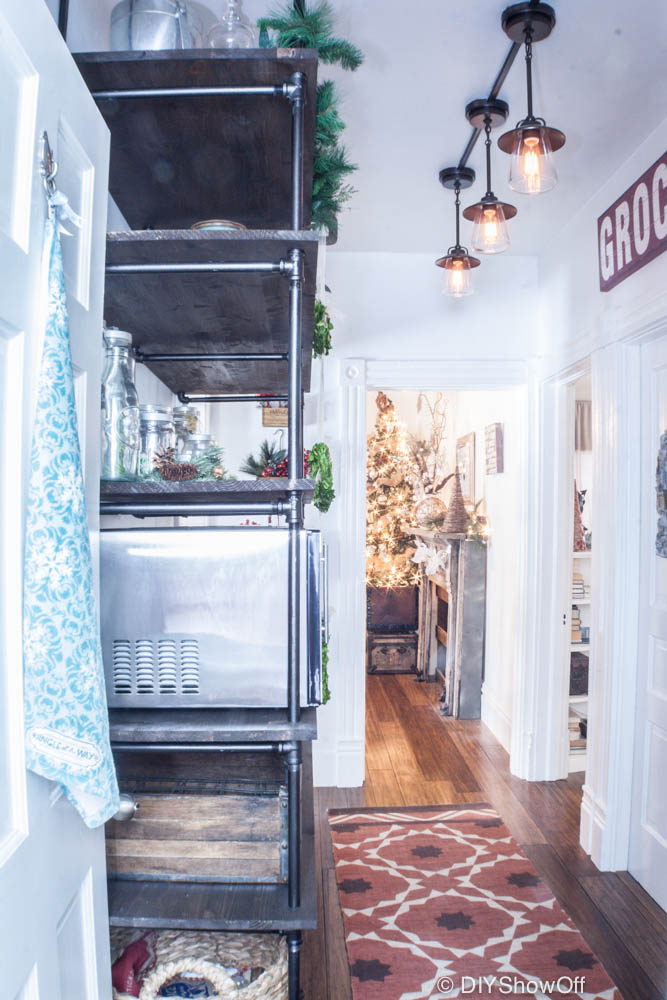
Now we utilize this area for extra food storage as well as a place to house our little-used microwave. It sits right next to the kitchen. This is from when we just finished before Christmas last year…

open pantry at diyshowoff.com

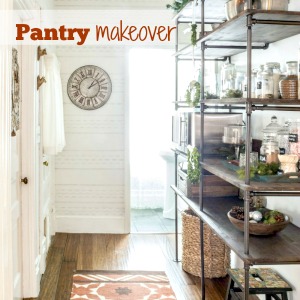
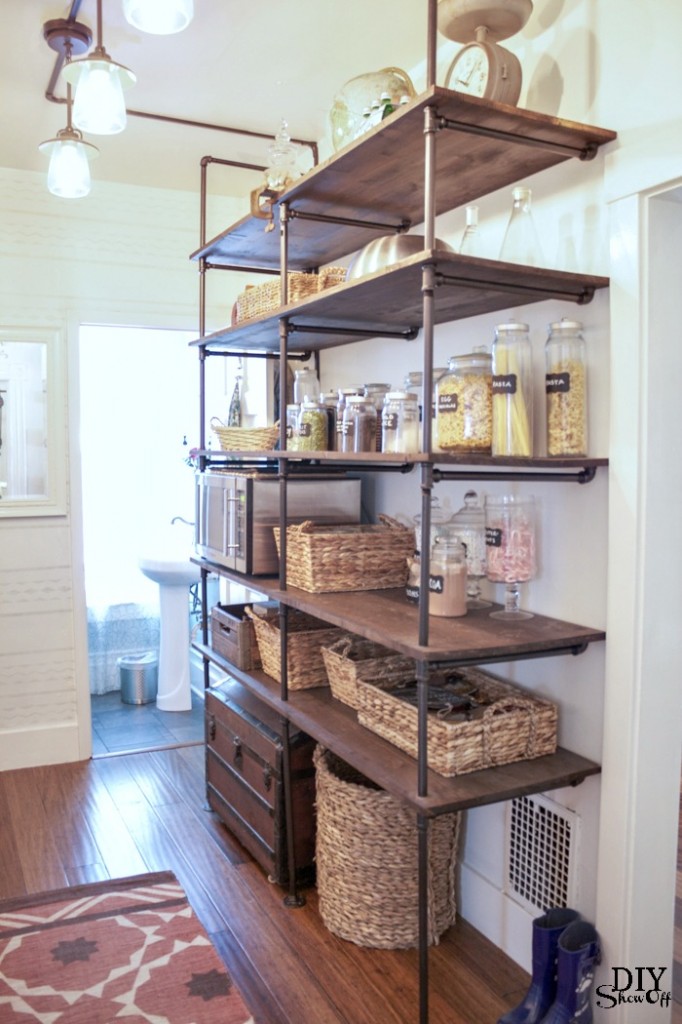
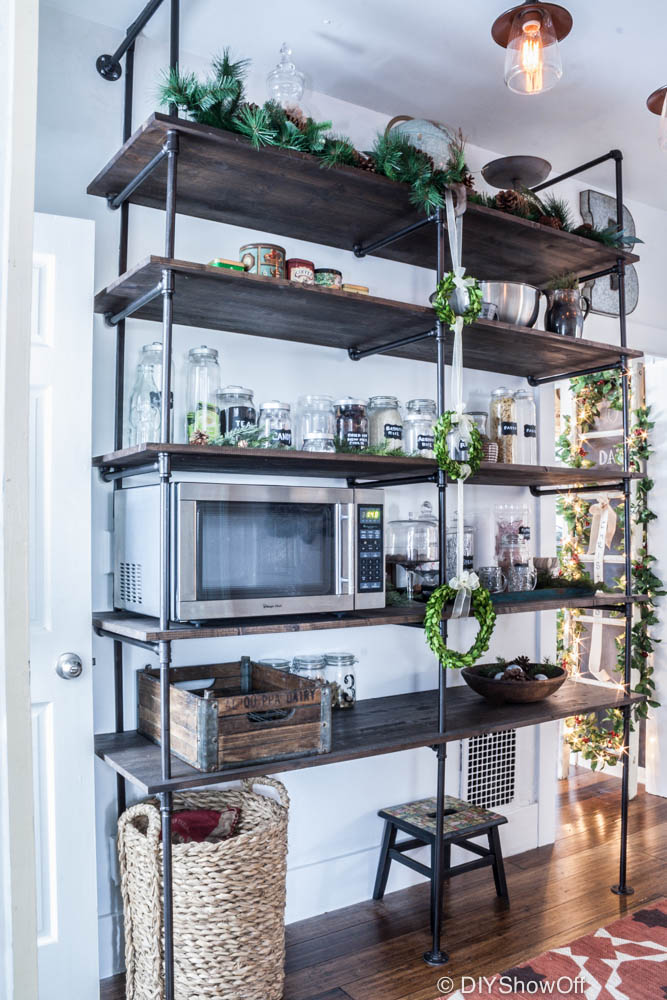
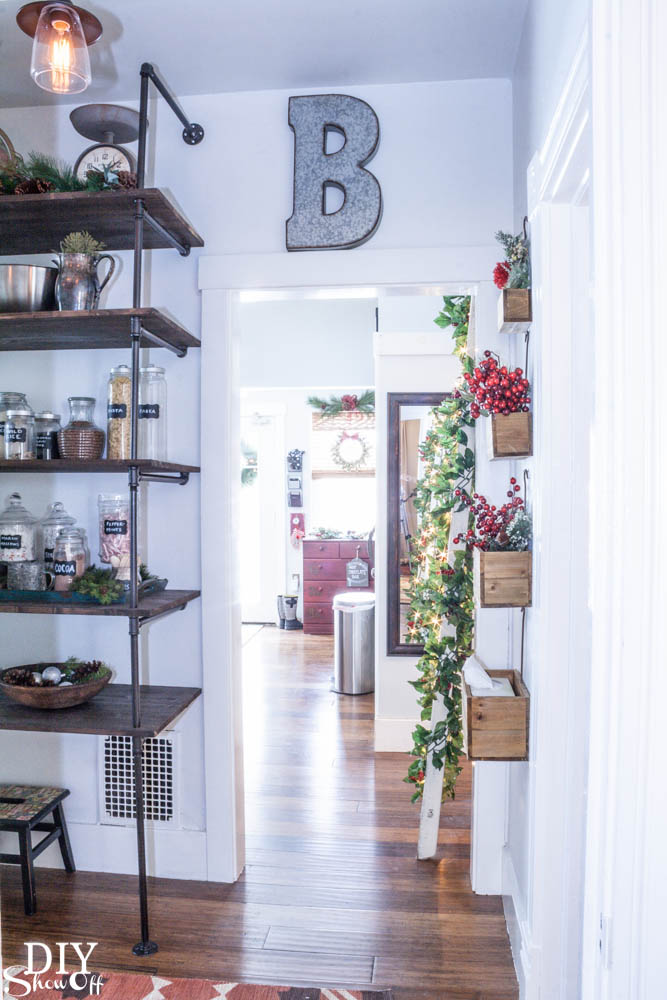
I keep this area organized and pretty with a little decorating and we’re slowly adding dried foods to the shelves in pretty glass containers. Canned foods and boxes get stored in baskets and other ‘not-so-pretties’ behind closed kitchen cabinets.

open pantry with pipe shelvingfarmhouse pantry decorDIYShowOff Pantry

Related blog posts: 

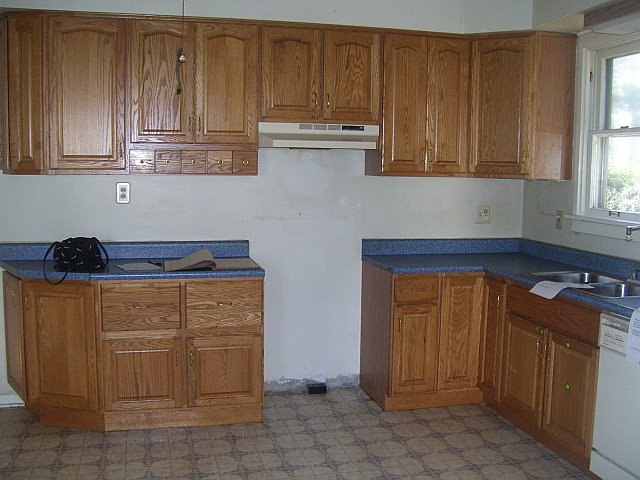
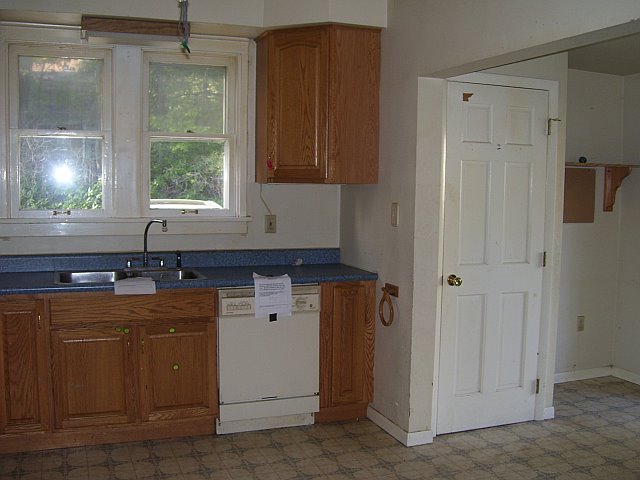
Our kitchen before screamed ‘OUTDATED!’ I love revisiting the before pictures. Sometimes I focus on what’s not done and forget how much we have accomplished. 

before

kitchen before

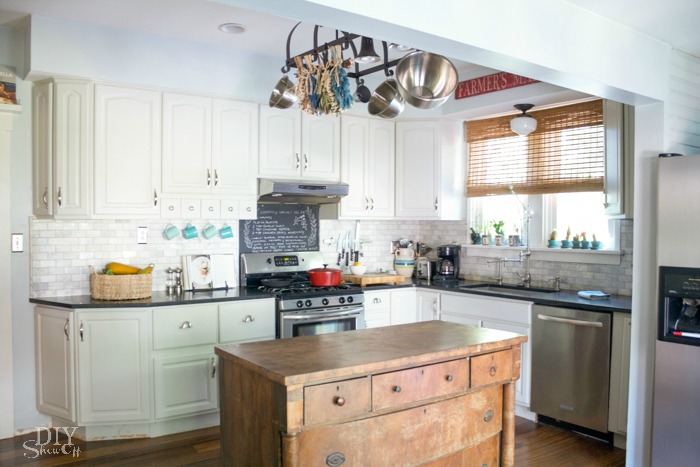
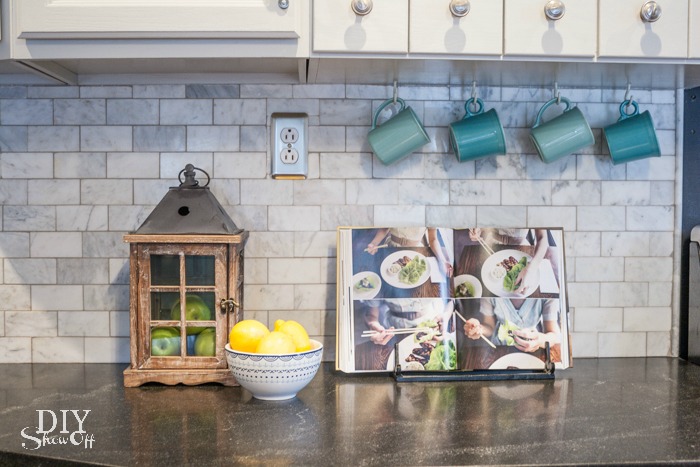
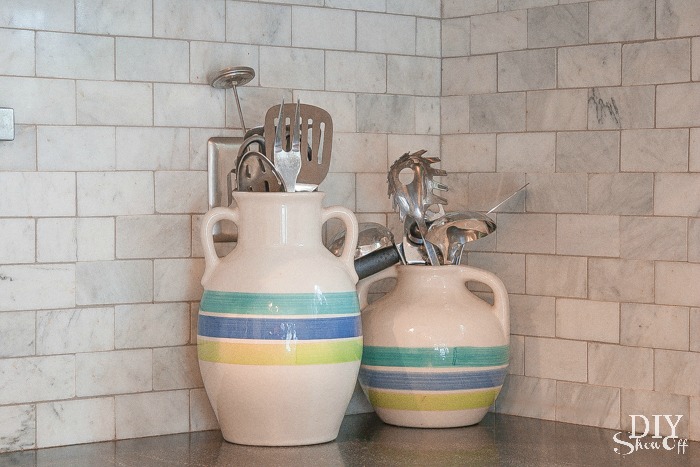
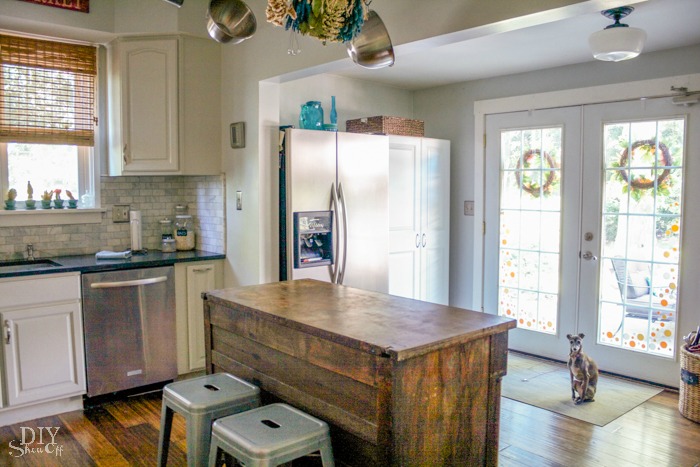
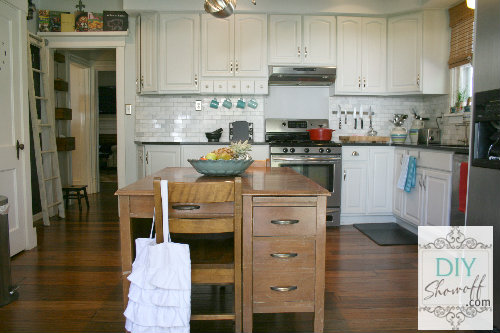
After painting the cabinets, new granite countertops, new sink, new faucet, a marble subway tile backsplash, bamboo floors and the power of paint, it’s transforming into one of our favorite rooms. 

after

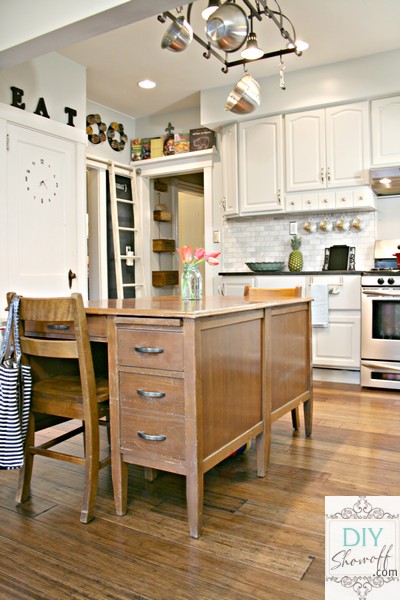
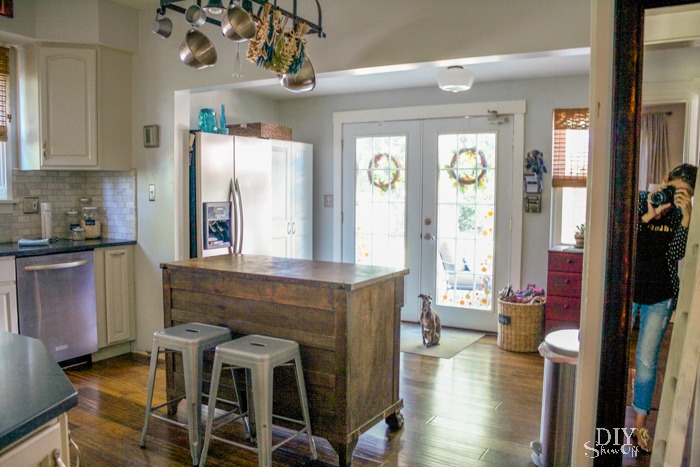
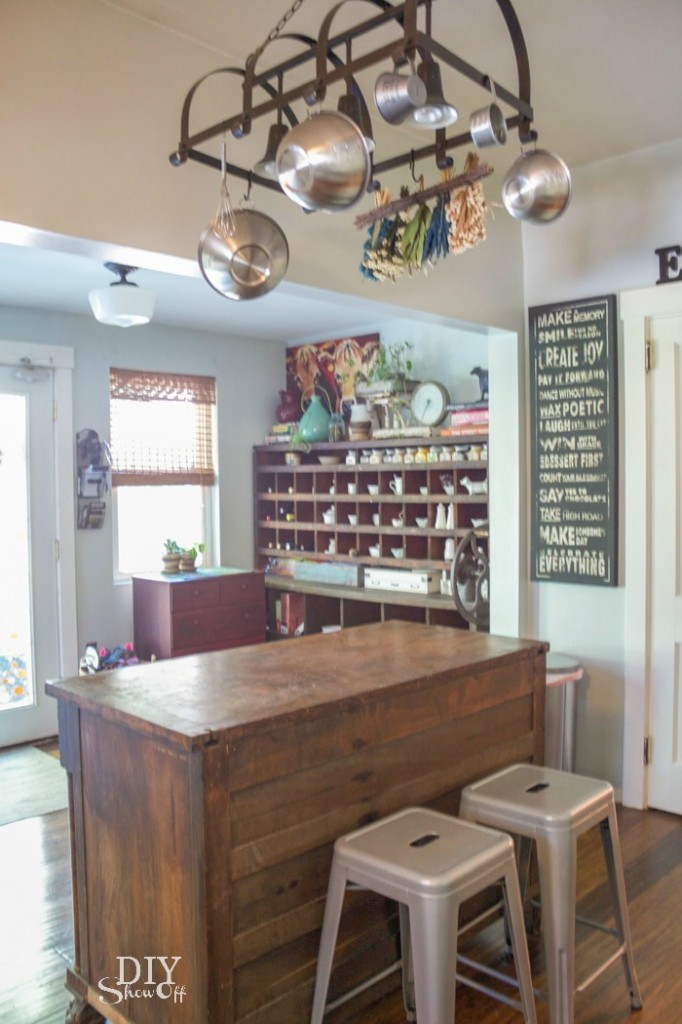
kitchen makeoverdiyshowoff kitchenWe’re still undecided on our kitchen island. So currently we’re using an antique dresser. Sometimes I use 2 vintage desks pushed together. You never know what I’ll drag into the middle of the floor. Always changing!

farmhouse kitchen

DIYShowOff kitchenDIYShowOff kitchen 

before

farmhouse kitchen before

after…with a little bonus shot of me in the mirror. Do you spy a little Italian greyhound too?

kitchen at diyshowoff 

before…

farmhouse kitchen before

after…

kitchen at diyshowoff.com

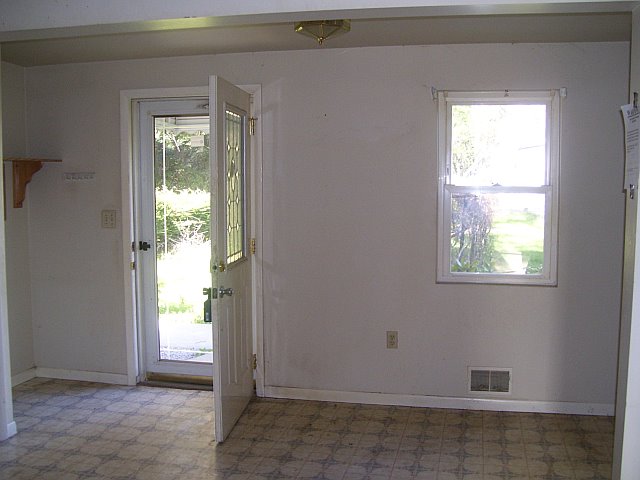
before we bought the house…I don’t even want to know what’s on the wall. 

kitchen before

after…

kitchen at diyshowoff.comkitchen at diyshowoff.com

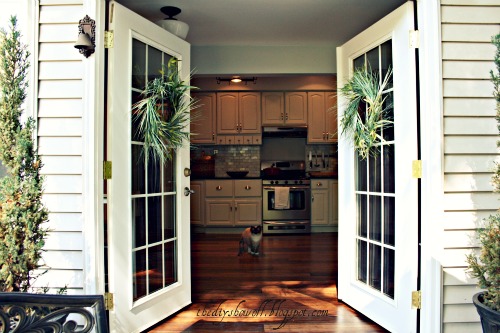
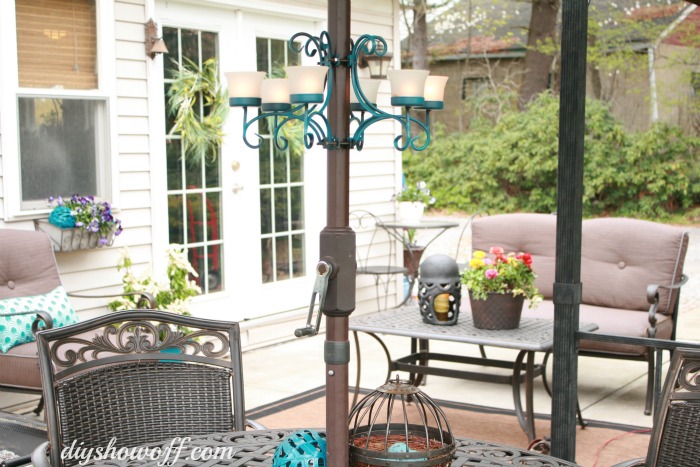
We love that the French doors lead right to the patio where we entertain and dine outdoors in the summer time. It makes serving and clean up a cinch. 

french doors, kitchen, bamboo floors, farmhouse tour, do it yourselfpatio-makeover

Related blog posts:

Home Tour

What about you? What’s the favorite room in your home? Inquiring minds want to know! 😉 

Thanks so much for stopping by! Thanks so much to Lindsay from The White Buffalo Styling Co. for organizing such a fun series. Now pop on over to the final stop: beautiful Iron & Twine

Not only is our house undergoing cosmetic changes but we’re on a journey to a chemical free home too! 

Check out how you can join me in taking the first steps to creating a healthier lifestyle with Young Living Essential Oils at diyshowoff.com

Pantry Lighting Dilemma & Solution

Some of you were wanting more details on the lighting when I shared the pantry reveal. The lighting in the open pantry area was a challenge. 1. There was no overhead/ceiling light to begin with. 2. Walls and ceiling are plaster. 3. Outlet was old and controlled by a switch on the wall. 

Lighting Dilemma

Electrical work for the lighting was not DIY. My husband has installed recessed lighting in the kitchen but he was able to run electrical from the previously installed ceiling light, so it wasn’t quite so challenging. For the pantry area, no previous lighting meant pulling the wires from the wall to the ceiling. He started with drilling holes in the plaster wall and ceiling but the wood beam where wall meets ceiling had us realizing this job was ‘over our heads’ and not just literally. It was at this point that we decided to hire an electrician.

outlets

Solution

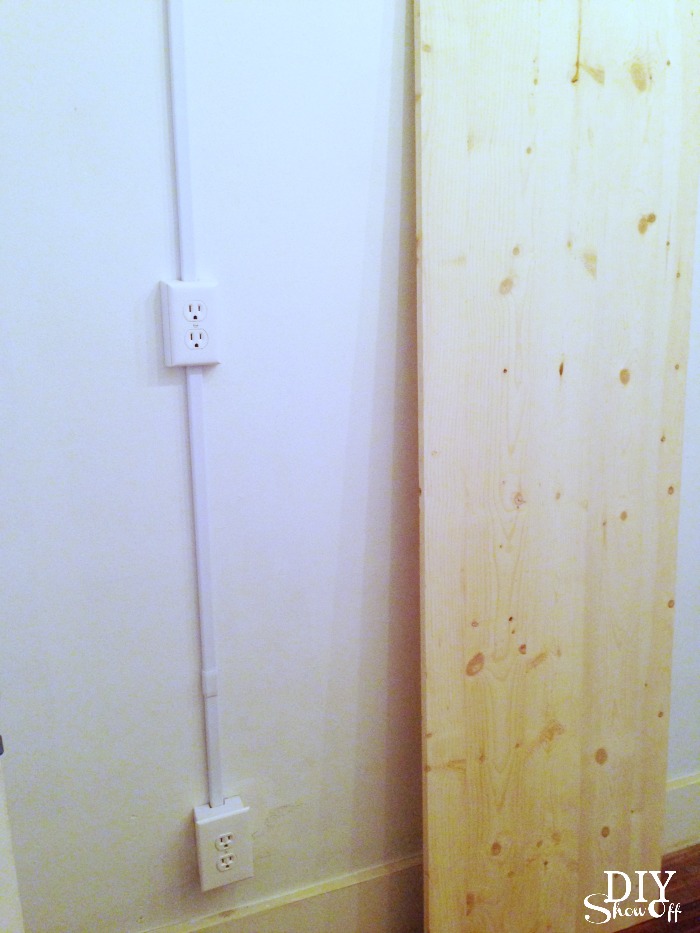
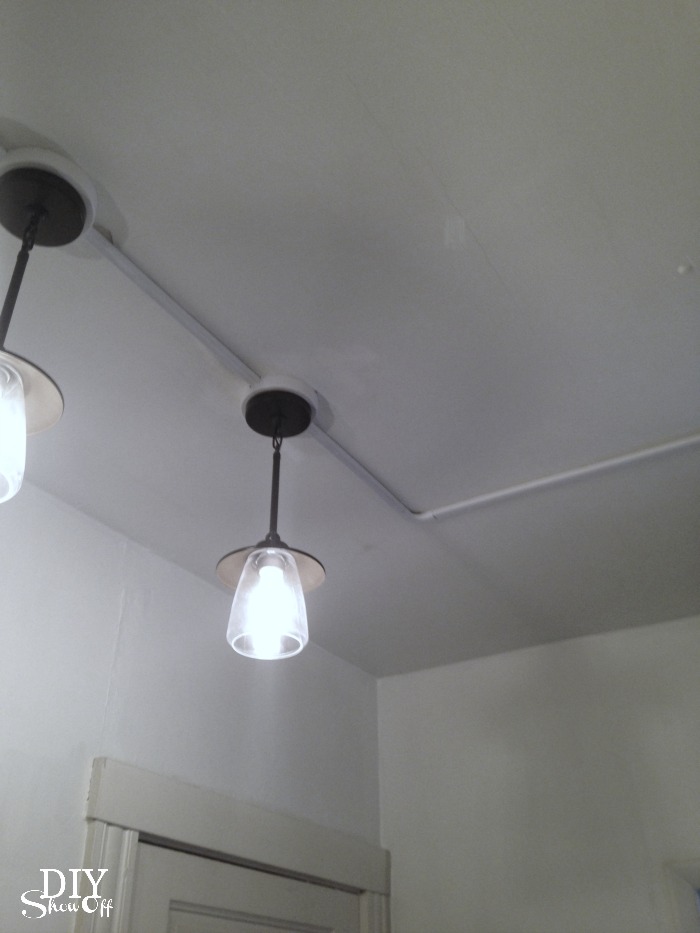
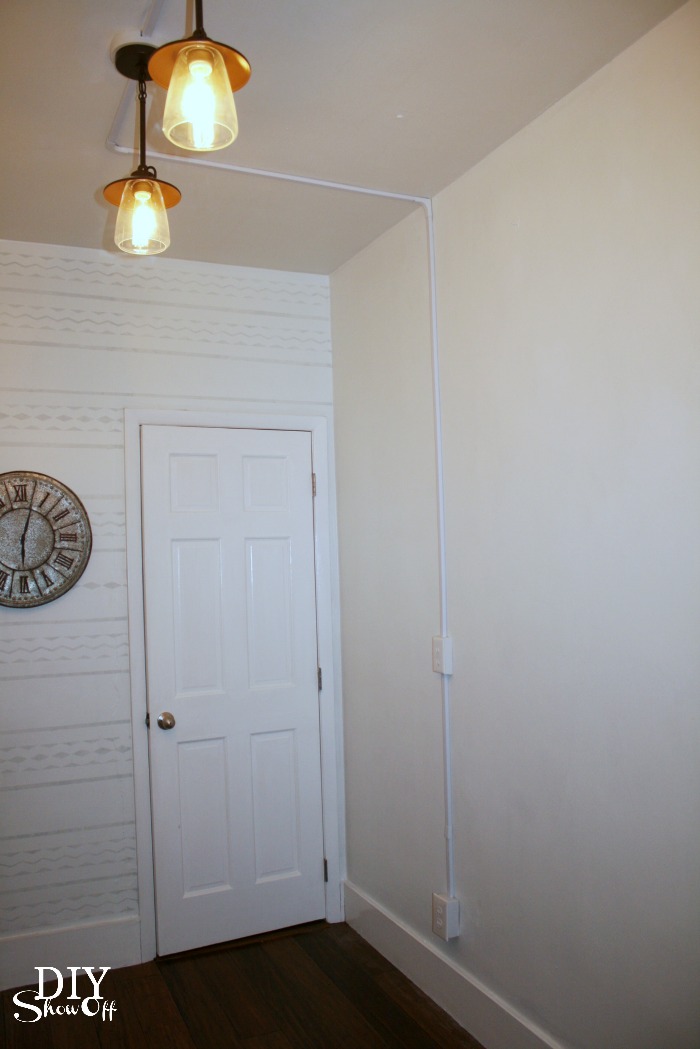
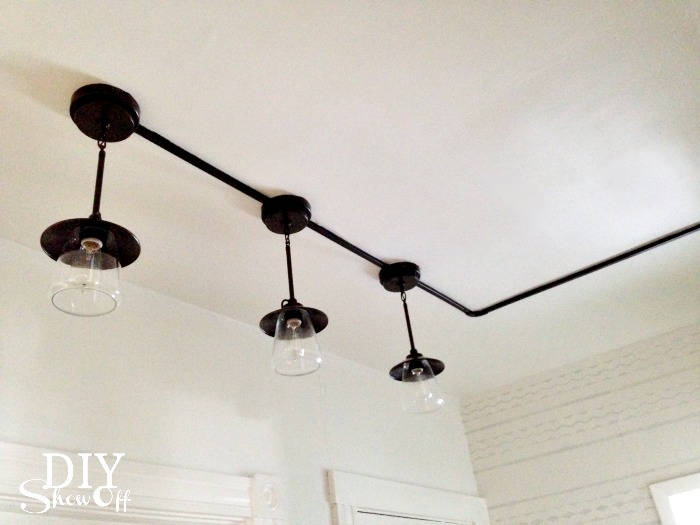
Then after some thought and to keep labor costs down, I let the electrician know that I wanted the wiring to run on the outside of the wall. He changed the old outlet near the floor (the old type that meant I needed an adapter anytime my plug had three prongs), added another outlet a little higher up to accommodate the microwave sitting on the pantry shelf (so I wouldn’t have to drill holes into the wood shelves for the cord to reach down to the lower outlet) and ran the lighting wiring up the wall, to the ceiling with a 90 degree turn to place the lighting. He also made the switch work for the lighting only, disconnecting the switch from the outlets. In hind site, I think this was something we could have done, but when in doubt, seek professional advice! 

connecting light fixtures

pantry lighting

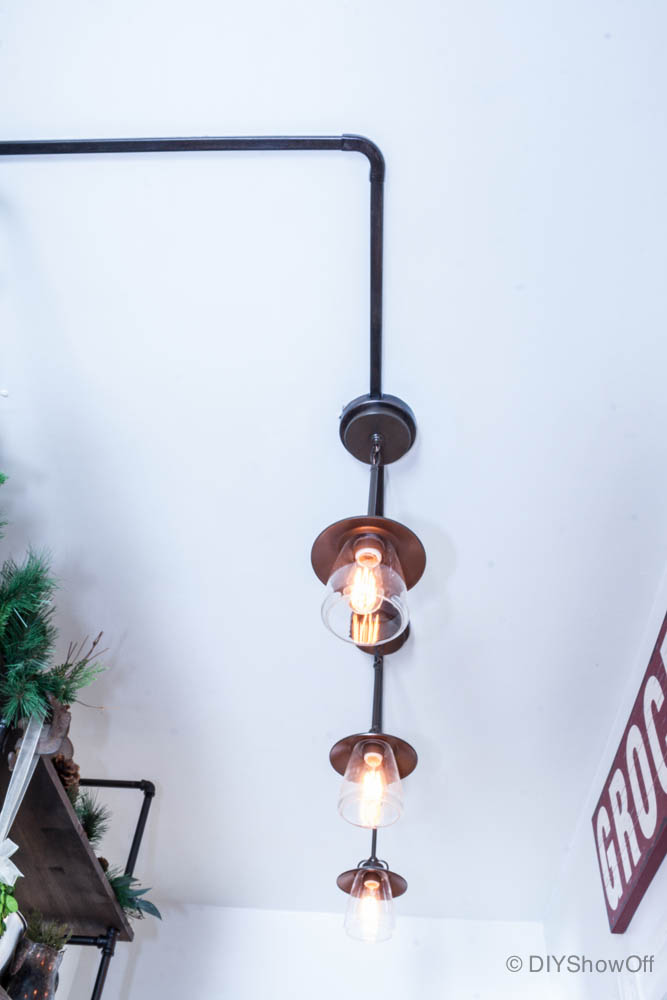
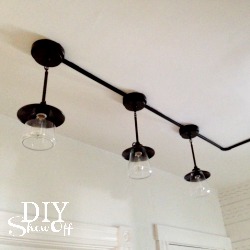
Cord covers for the wiring from outlets, along the outside of the plaster wall, along the ceiling and connecting each individual light fixture.

I centered the lighting from the front edge of the shelving to the other wall and since I chose pendant lights, I made sure they were out of the way of an opening door. 

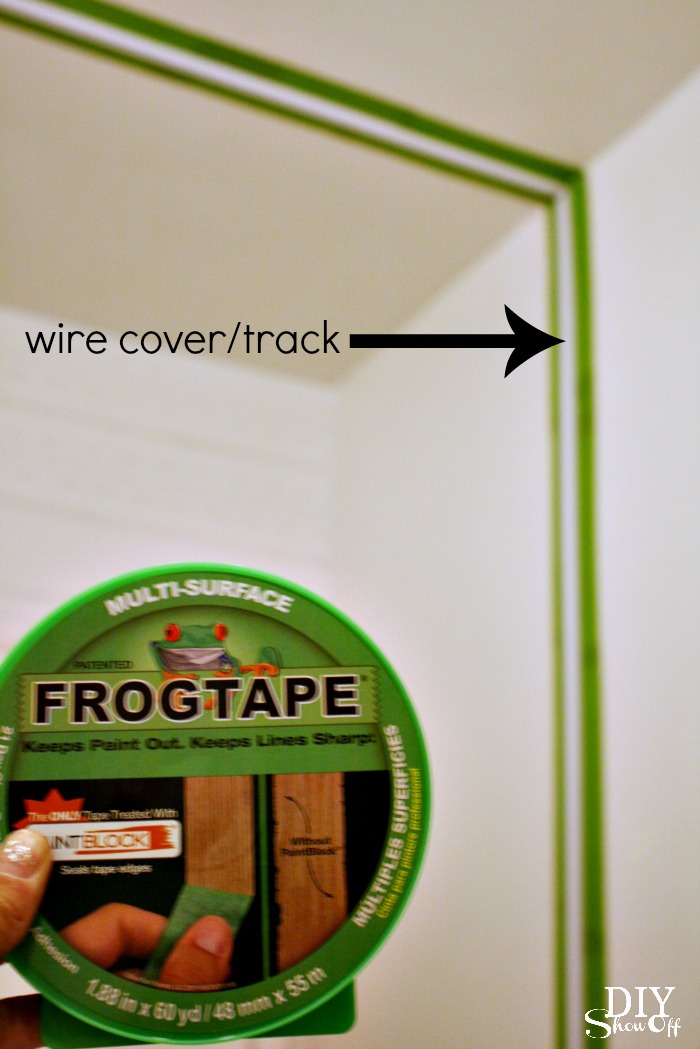
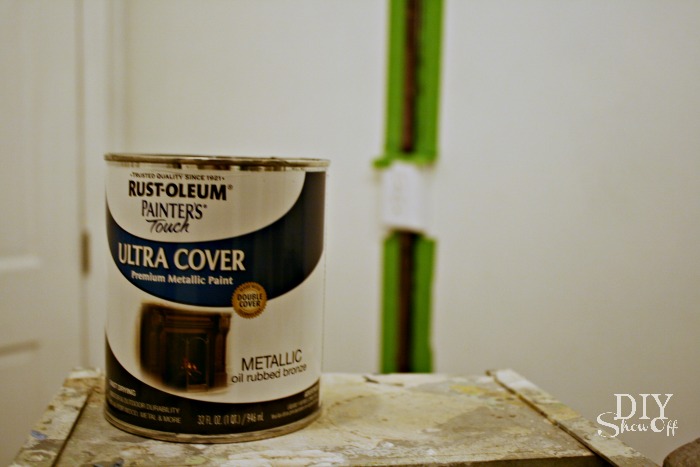
Then with the help of FrogTape® Multi-surface, I painted the track oil rubbed bronze.cord cover

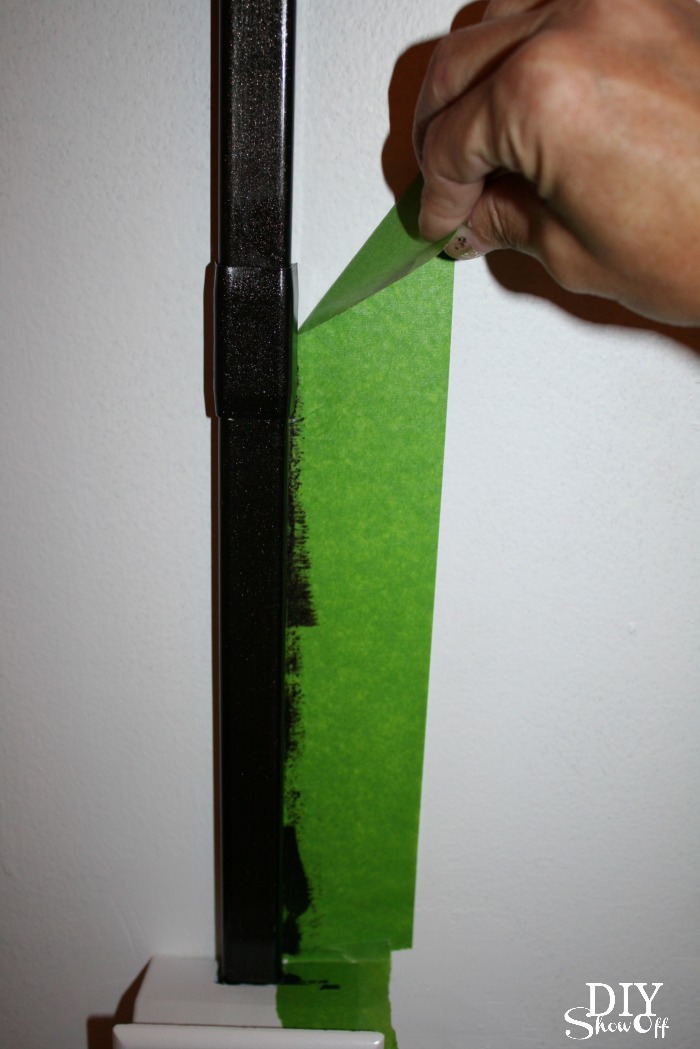
I simply taped off either side of the conduit track along the wall and ceiling with my FrogTape and used my thumbnail to activate the PaintBlock® Technology. Then just painted the track. The oil rubbed bronze paint is sticky since it’s oil based so drying time is longer but still worth the work. It took two coats. 

oil rubbed bronze paint

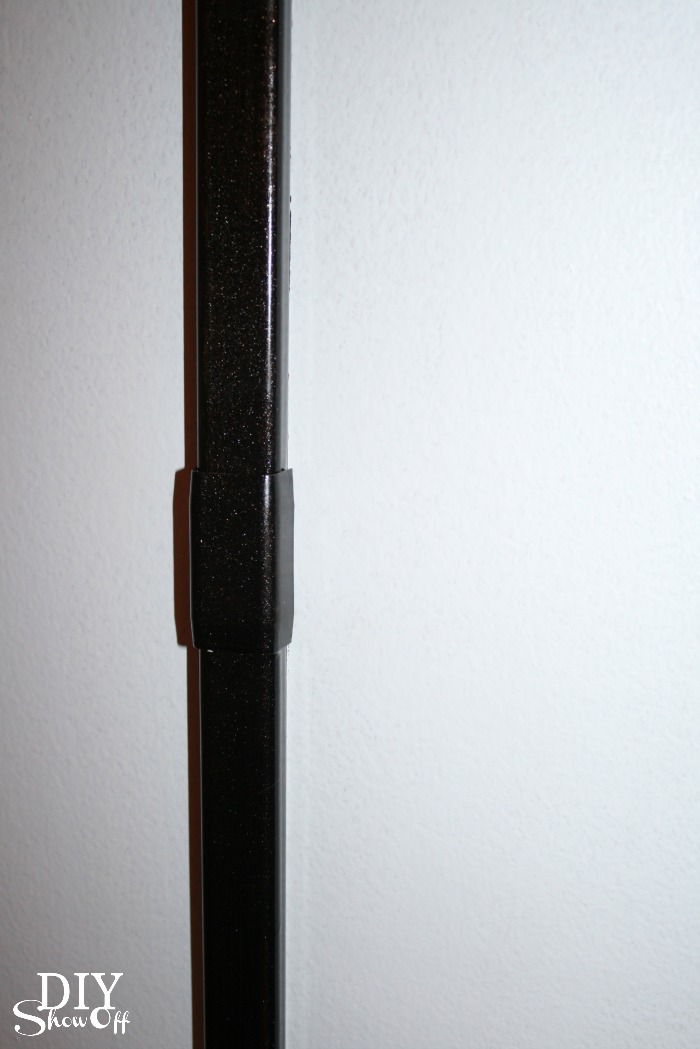
As soon as I finished applying the second coat, I removed the FrogTape. Nice and clean! Note: paint will take a long time to cure!

removing FrogTape

Painting the conduit the same color as the walls and ceiling would help disguise it more but I think the oil rubbed bronze against the white ceiling adds to the industrial charm, don’t you? Especially with the pipe shelving.

RustOleum Oil Rubbed Bronze

Result

I love it!

industrial pantry lights with wall track

Project Supplies:

  • FrogTape® Multi-Surface painter’s tape
  • 3 round plastic electrical boxes
  • 3 pendant lights
  • low voltage cord cover with peel and stick tape backing, wide radius elbow (for where ceiling meets wall) and elbow (for 90 degree turn on ceiling) and couplings (for seam coverage where needed).
  • Rust-Oleum Painter’s Touch – oil rubbed bronze (brush on/in a can)
  • Note: Electrician supplied the romex.

farmhouse industrial pantry lighting

 We also added a dimmer.

FrogTape Blog Squad

Disclaimer: I received compensation to complete this project for using FrogTape® products. All opinions, projects and ideas are based on my own experience. See the  FrogTape® Blog Squad for more inspiration!

Related Posts:

Before & After Pantry Makeover

industrial farmhouse pantry makeover before and after

DIY Pipe Shelving Tips

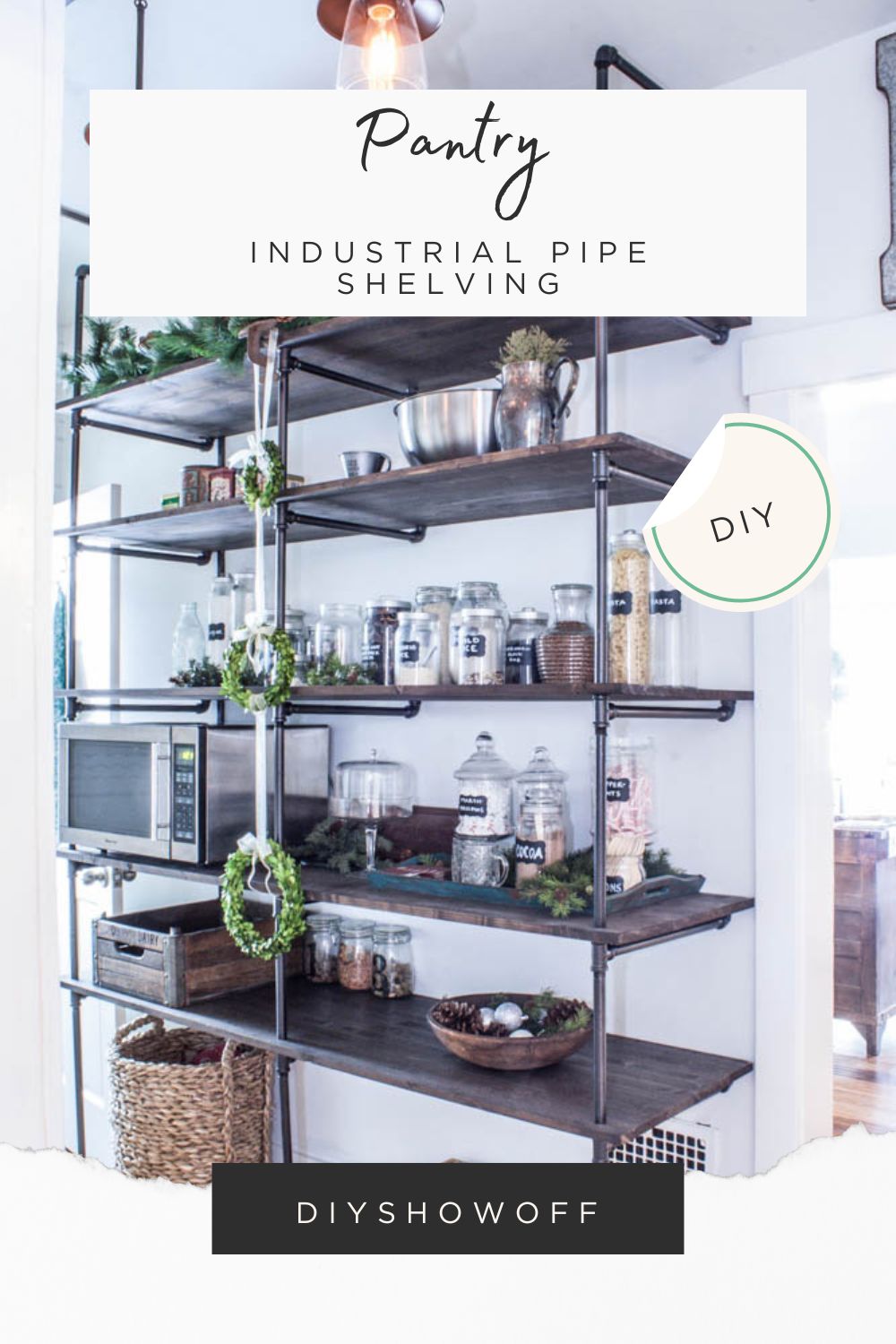
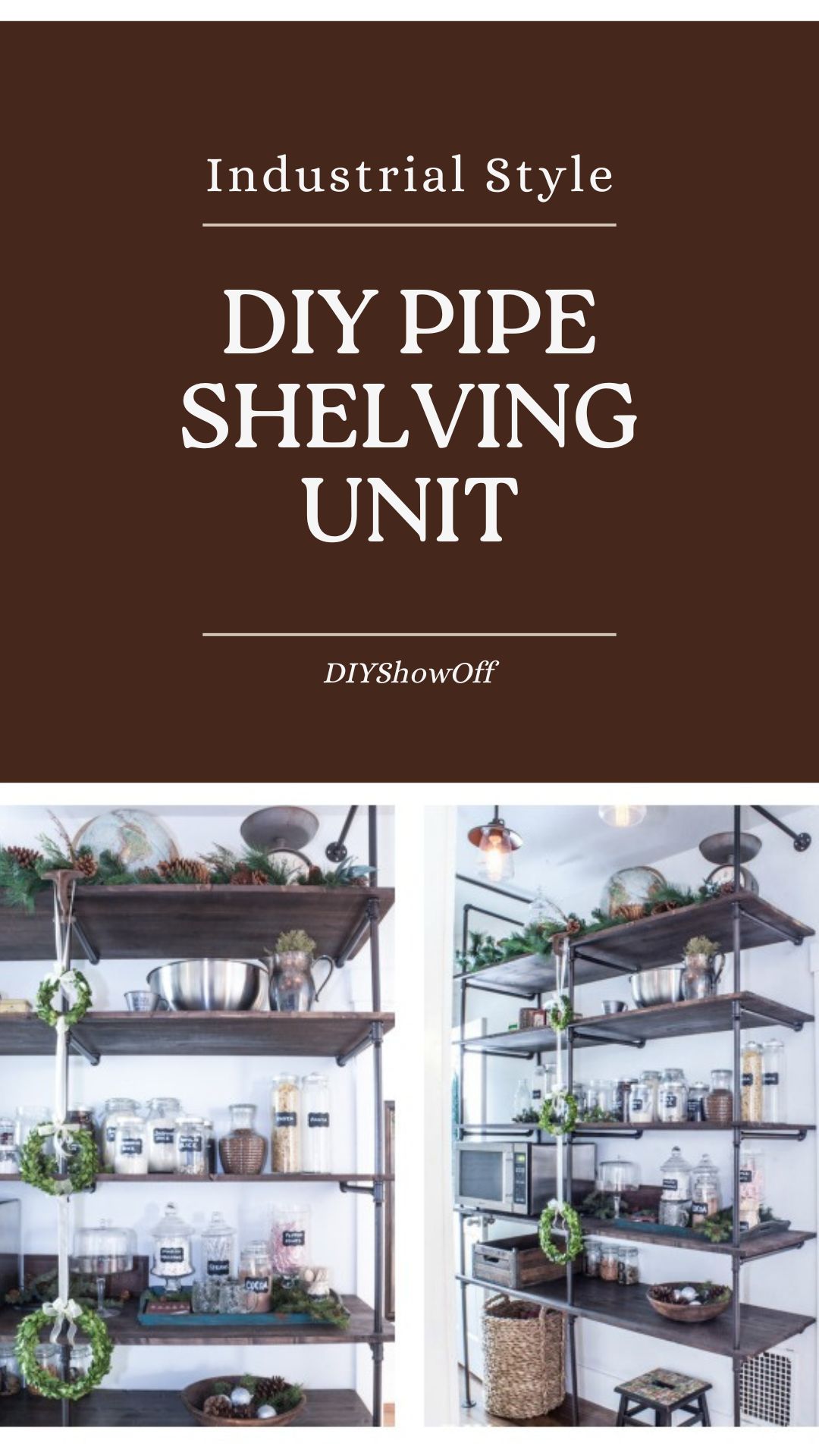
DIY industrial pipe shelving unit in pantry with wood shelves and black pipe frame for storage and decor

Accent Wall

industrial farmhouse pantry

DIY Pipe Shelving Unit: Tips for Building Industrial Shelves

Featured

Industrial pipe shelving adds storage and character while fitting your space exactly. We designed and built ours for a small pantry area, and while it looks complicated, breaking it down step-by-step made it much easier than expected. I recently shared the open pantry before and after reveal and the star of that DIY ‘show off’ is definitely the industrial pipe shelving…


What to Know Before You Start

THIS IS LONG and sounds confusing BUT if you’re making one of your own, I think being detailed will help make the plan, design and build easier along with other tutorials and tips you may come across in your search for how to make DIY industrial pipe shelving. 
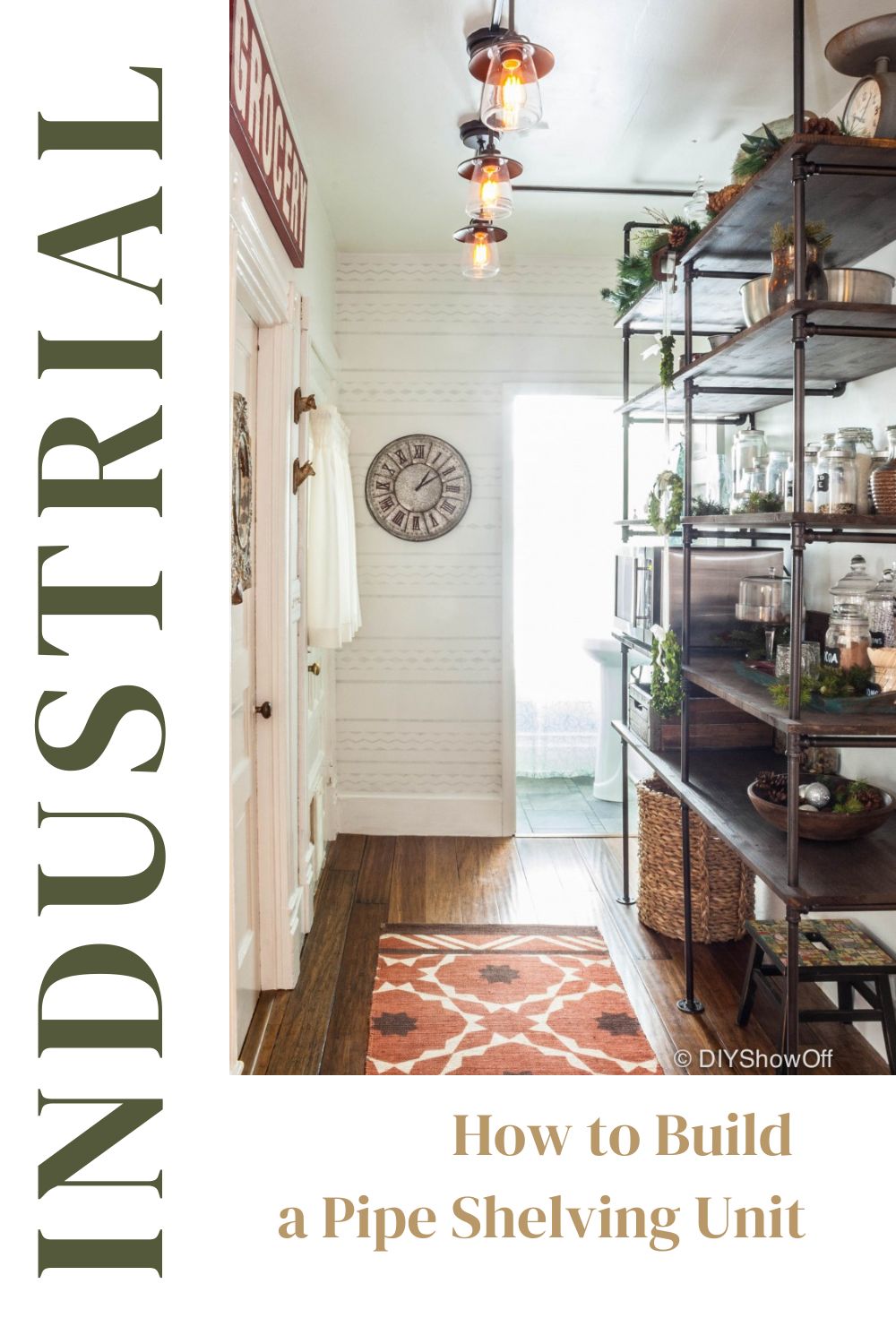
DIY industrial pipe shelving unit in pantry with wood shelves and black pipe frame for storage and decor

Planning Your DIY Pipe Shelving

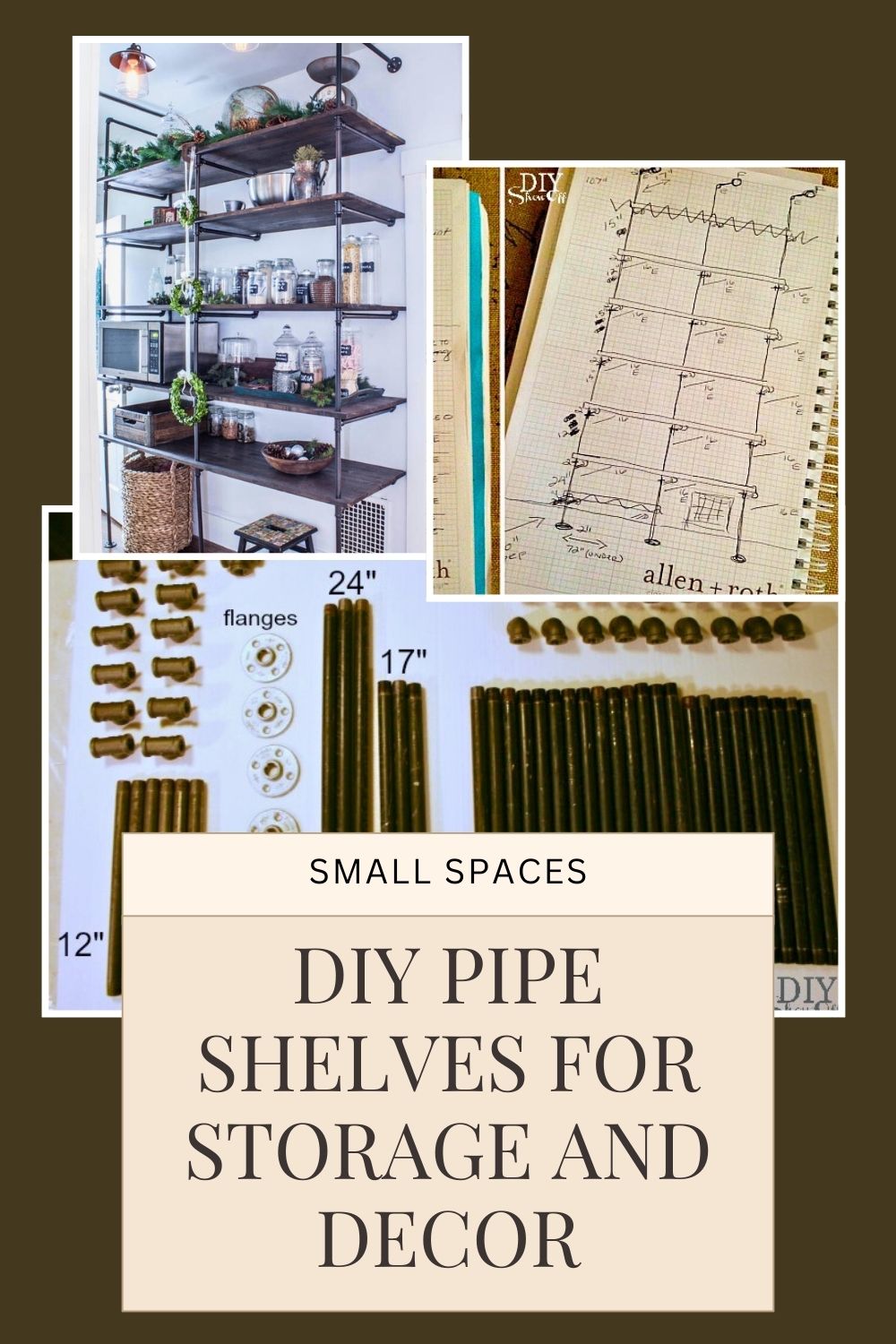
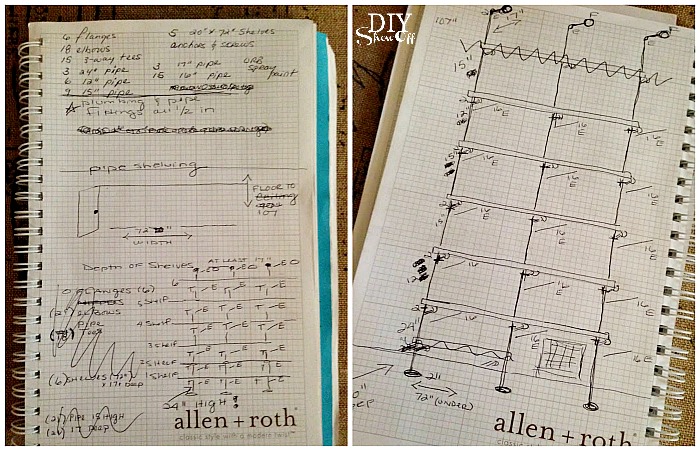
The most difficult step (and not really that difficult when sketching a visual to help ‘build’ the correct size) will be your measurements and design. I’m no architect or artist, so my sketch is rough without fancy drafting software but it gets the job done and I was able to see where I needed to make adjustments. Start with measuring the space where the shelving will go. Length, height and width. I just drew the shelving (not to scale) on a piece of paper and labelled the measurements. Keep in mind that stock pipe comes in 12″, 18″ and 24″ pieces…any other size pipe will need to be custom cut/threaded (done by a Lowe’s associate).industrial pipe shelving plans
Understanding the Construction

Once you understand how the pieces connect, it becomes much easier to customize. For 6 foot wide shelving, I wanted three supports for each shelf. Not enough support and the wood shelves may sag with weight over time.DIY pipe shelf construction The pipe shelving frame is only connected horizontally by the wood shelving. Mine is only attached at the wall near the ceiling. I didn’t notice until assembling that my pipe cutting order was missing a piece so there should actually be another wall flange/pipe in the center top (and will be once I have more pipe cut). You could also screw it into the floor but we did not. It sounds as if it would be unsteady. Mr. DIY even had plans to add brackets for extra strength, however when installation was complete, even he was surprised by the how sturdy it is.
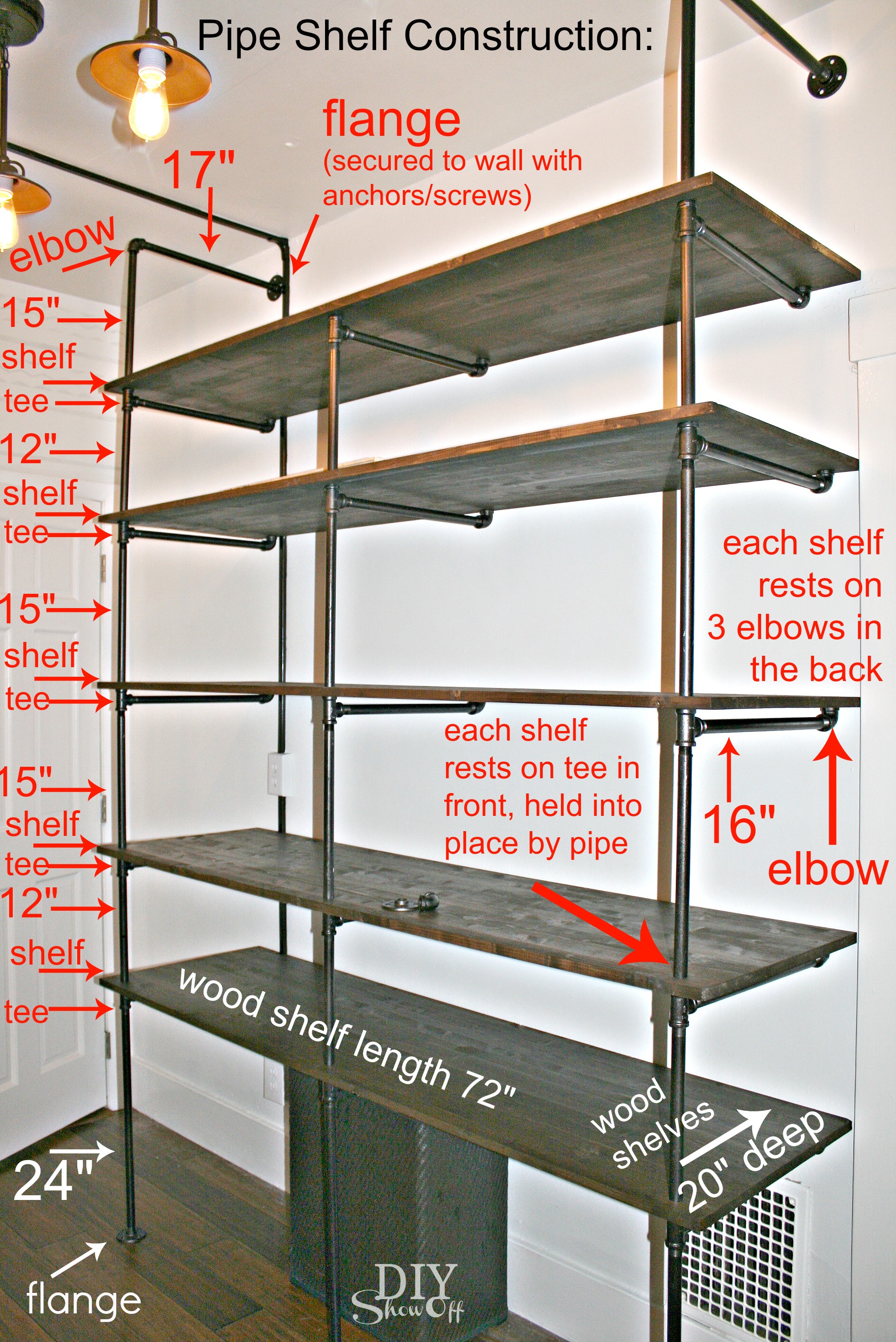
Each of the three built up/connected vertical pipe supports are individual and not connected to each other in any way. (Labeled on the left in the photo above as an example.)

Each wood shelf has three holes on the outer front edge (one on the left, one in the center, one in the right). Each shelf front is supported by resting on top of a tee in the front, threaded through a hole in the shelf with the vertical pipe. On the back, each wood shelf rests on an up-turned elbow. So each wood shelf is not anchored or screwed down in any way. It’s simply locked into place by the front pipe pieces through the holes in the shelf. Each shelf rests on a three tees in the front and three elbows in the back. 

My (vertical) measurements are rough but I knew that I had a 107 inch cap (the height from floor to ceiling) and could not go higher. Adding the measurements visually helps with adding up the numbers. I estimated my fittings (the flanges, tees and elbows to be 2 inches – they’re actually smaller but it gave me wiggle room in my design so I knew my shelving would not be higher than 107″ and coming in a few inches lower is ideal). The wood shelving thickness does not come into play because it doesn’t add to the height of the unit. On my drawing, starting with the bottom of the shelving unit, I drew in the flanges and the number 2 for 2″. Then, because of heat vent placement, I knew my first shelf needed to be above that. I drew in the 24″ pipes. Then a tee (2 inches), then my next pipe length 12″, another tee (2 inches), 15″ pipe to accommodate our microwave height, another tee (2 inches), another 15″ pipe, another 2″ tee, a 12″ pipe, a 15″ pipe, 2″ elbow. Adding those up, my rough shelving unit height measured at 107. Exact in theory, but due to the varying heights of flanges, tees, elbows and pipe threads when assembling, actual finished shelving unit height came in at 102.5″ (so, overestimating measurements in the plan ensures that shelving unit will not be too tall for the space).

Horizontal: My wood shelves are 20″ deep. As shown in the photo above, in the front the shelving rests on 3-way tees, in the back, it rests on an upturned 90 degree elbow. I chose 16″ pipes for connecting the horizontal 3-way tee to the upturned elbow. (Because the tee sits 1″ in on the 20″ shelf, measures 2″, then 16″ pipe, then a 1″ elbow totaling 20 inches, meaning once threaded it won’t touch/rub/scratch the wall. Keep the total horizontal support measurement shorter than the shelf depth.) For my top three horizontal frame supports (only 2 shown in photos for now), I added an inch (17″) to reach threading the wall/flange.

Horizontal pipe pieces:

  • 3 for each shelf (15 total for 5 shelves)
  • 3 for top of industrial pipe shelving frame 

Note: You may want to adjust pipe lengths to fit your own design. Maybe all one size or staggered shelving or a desk area. But once you understand the construction, you can customize each shelf’s height to fit your space. I used black iron pipe because the cost was a bit lower. Galvanized or maybe even PVC would work as well. All of my pipes and fittings are 1/2 inch. A Lowe’s associate made cuts and threads on pipes that were not an ‘in stock’ size. 

Shop: Make a list of plumbing supplies by counting up each tee, pipe, elbow and flange in your sketch.
DIY industrial pipe shelving unit in pantry with wood shelves and black pipe frame for storage and decor

Materials

For a pipe shelving unit measuring 72 inches wide x approx. 102.5 inches tall x 20 inches deep. 

Wood + Finishes

  • (5) 1 x 20 x 72 inch stain grade pine planks
  • Rust-Oleum Oil Rubbed Bronze spray paint
  • Rust-Oleum Ultimate Wood Stain (I purchased 1 qt.) (color is Kona)
  • Rust-Oleum Ultimate Polyurethane (matte finish)
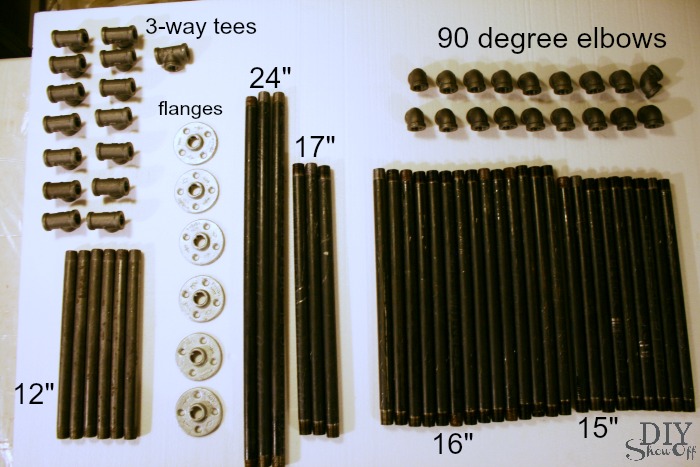
DIY pipe shelving plumbing materials

Pipe + Hardware

  • (6) flanges (be sure to get the correct fitting size for 1/2 pipe)
  • (18) 90 degree elbows (be sure to get the correct fitting size for 1/2 pipe)
  • (15) 3-way tees (be sure to get the correct fitting size for 1/2 pipe)
  • (3) 24″ pipes 
  • (3) 17″ pipes (custom cut/thread)
  • (15) 16″ pipes (custom cut/thread)
  • (9) 15″ pipes (custom cut/thread)
  • (6) 12″ pipes
  • screws and walls anchors
  • 7/8″ hole saw bit (perfect circle cut for 15 holes)

What We Did (Step-by-Step Overview)

Prep the Pipes

First step will be to clean the pipes. Because oil is needed for the cutting process, they will be filthy, dripping with oil and there are likely going to be pieces of pipe that have that annoying super tacky glued price stickers protected by packaging tape that will need removed. Since I used iron pipe, I could not let the pipes soak in soapy water (they’d rust), so I used grease-fighting Lysol wipes, paper towels and lots of patience.

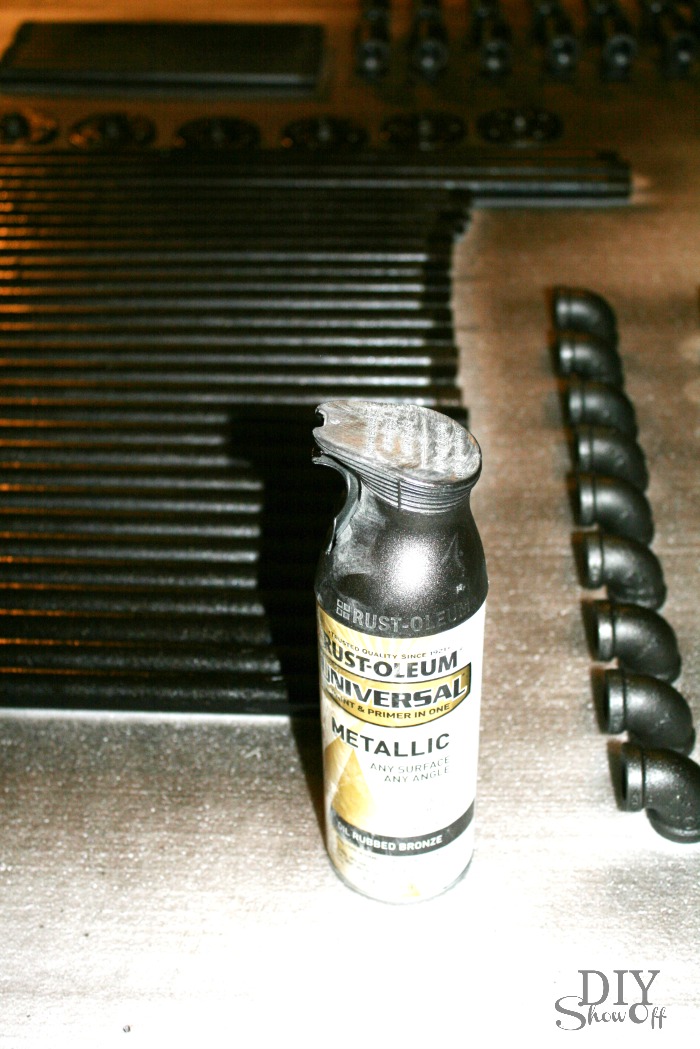
Paint: Next I spray painted all of the plumbing pieces Oil Rubbed Bronze. I did not use primer. Because I chose black iron instead of galvanized, scratches or poor coverage aren’t an issue.  spray painting pipes
Prep the Wood Shelves

We cut 1 inch off of our 72 inch length so we’d be able to open the half bathroom door the entire way. This doesn’t affect anything. Decide where you want the holes (for the pipe supports) to be placed. I decided about 1 inch in from the front, 2 inches in from the sides. I created a template from a piece of cardboard. It looks like this:industrial pipe shelves tutorial
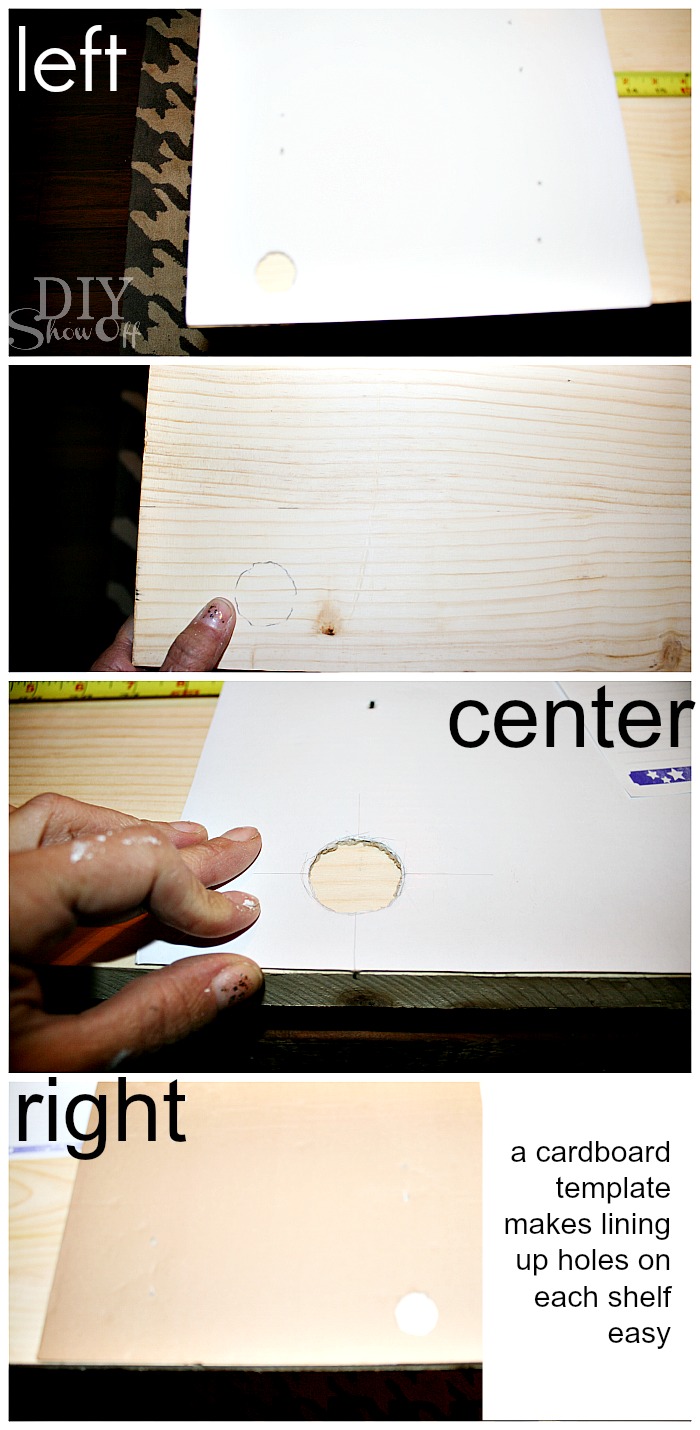
I simply lined up the edges of the cardboard with the left front edge of the wood shelf and marked my circle/cut mark with a pencil. Flip the cardboard and do the same for the right front edge. I measured the center of my 71″ length and pencilled in the circle/cut mark, lining it up with my template/stencil. I did this with each wood shelf. 

Cutting/drilling the holes: We drilled a tiny hole into the center of each penciled circle (made lining up the hole saw easier). We used the 7/8″ hole saw bit for perfect clean drilled holes. It made creating 15 holes all the same size a breeze! I lightly sanded and cleaned around the holes and our cut edge.
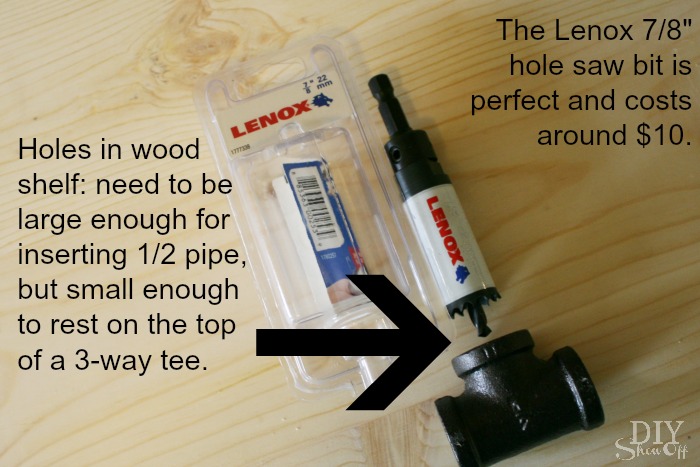
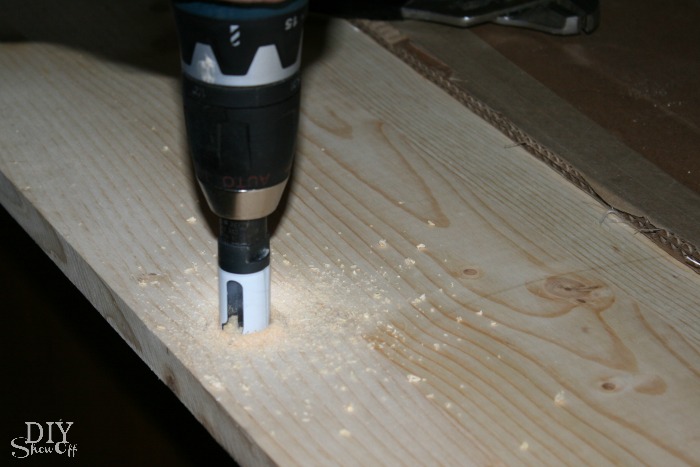
hole saw bit for pipe shelvingpipe shelving tutorial

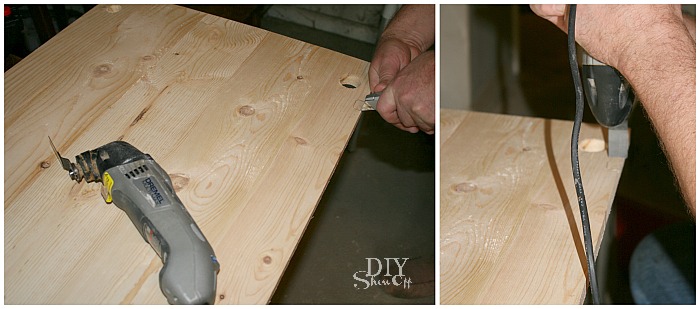
Because we have exterior wiring/conduit going up the wall behind the shelving, we had to create a notch on each wood shelf. We used our Dremel Multi-Max to to this. pipe shelving
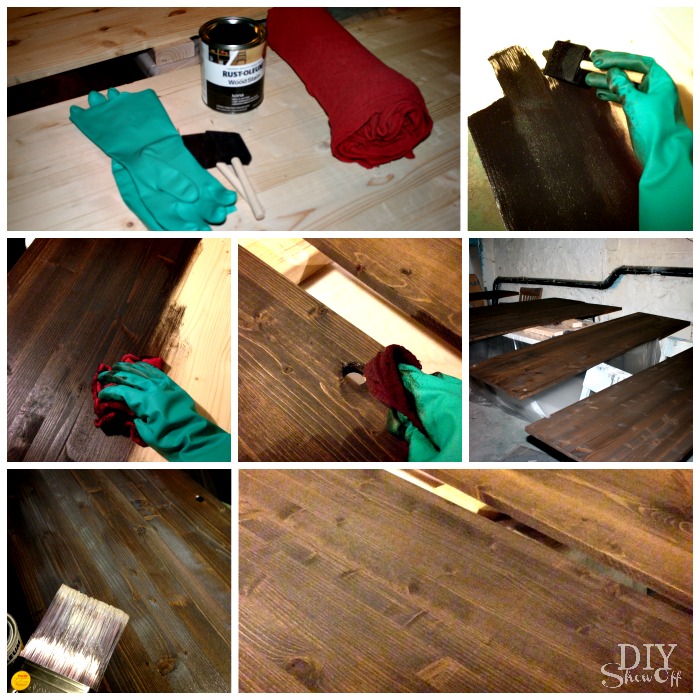
Staining and sealing each side of each wood shelf is the most time consuming part of the project. I love that Rust-Oleum’s Ultimate Wood Stain dries in about an hour. I only applied one coat…isn’t the color pretty? I did one side then flipped and did the other (the edges and inside of the holes too), applying with a foam brush and wiping off (rubber gloves and lots of rags are a must!). Watch for drips! Then I applied 5 coats of polyurethane to the top side (after this much work, you’re going to want to protect the finish on these shelves!), allowing to dry 2 hours between each coat. Again, watch for drips! No sanding between coats required. Once the one side was dry, I flipped the shelves and repeated brushing two coats to the bottom side, drying between each one. staining wood shelves
Assembly

DIY pipe shelving materials including black pipe fittings, wood shelves, and planning sketch for custom shelving unit

Level & Adjust

I was super nervous about this part. The size of the room did not allow for us to connect and lift the shelving into place. So we propped up the first shelf using a hamper and books and assembled in place.industrial pipe shelving assembly
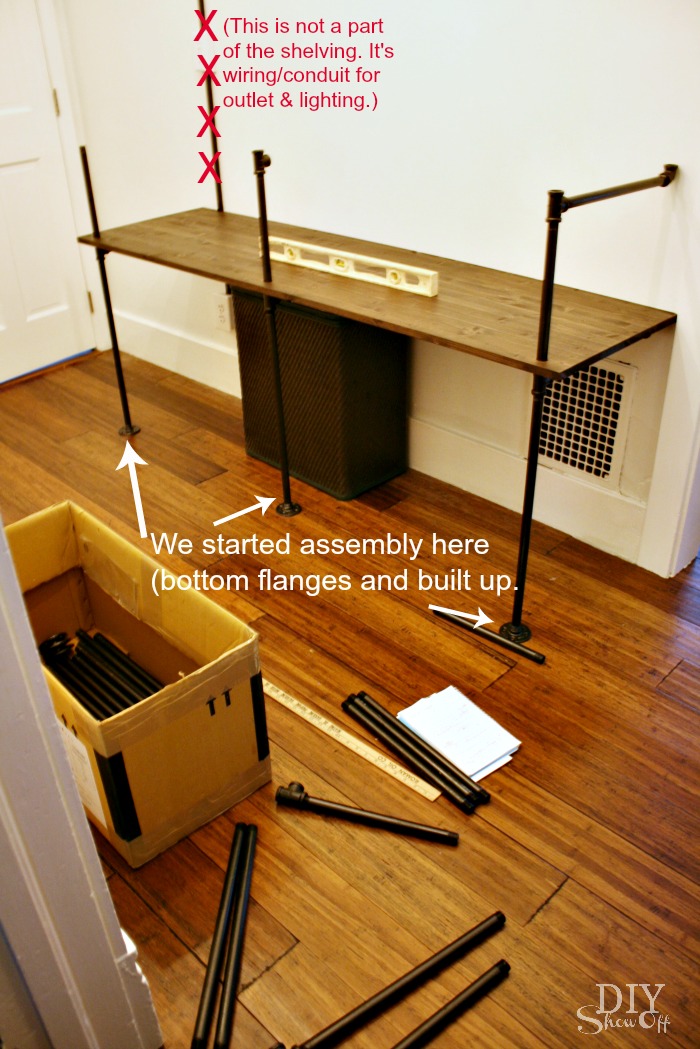
I can’t believe how easily and smoothly assembly went. I started by attaching flanges to the first three pipes. Then added a tee to each one. The tee should be placed in a direction with one opening facing up, another opening facing horizontal towards the wall. Next, attach a length of pipe (mine are the 17″ ones) to the horizontal facing tee. Attach an elbow at the end of the horizontal pipe. You’ll want the elbow to face up for supporting the wood shelf.assembling pipe shelving 
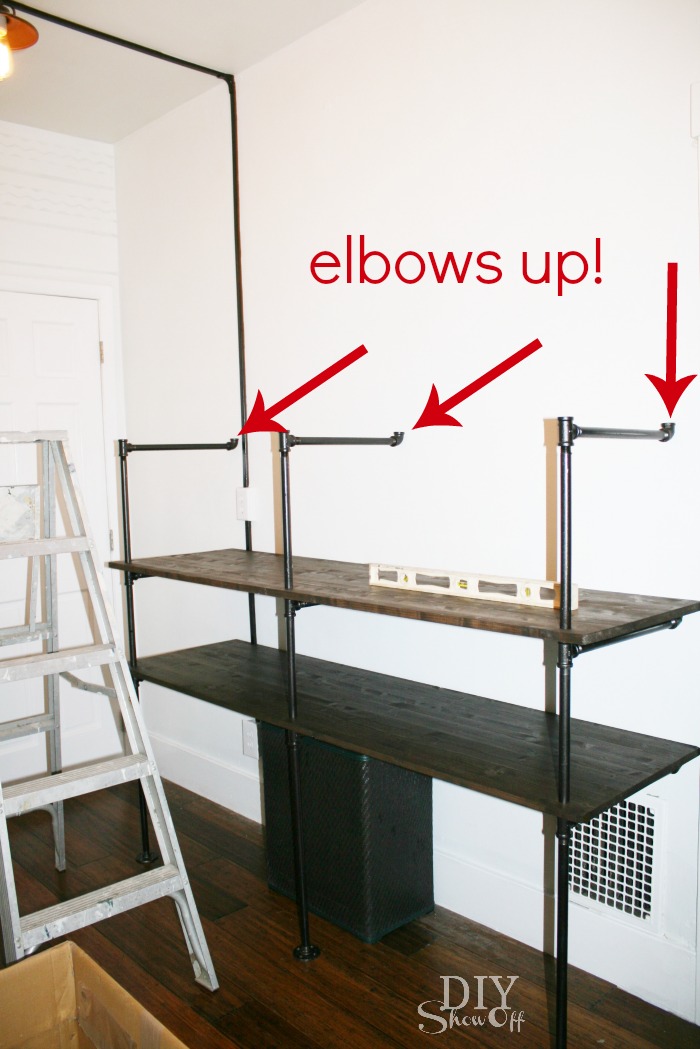
Hold that piece into place under the hole in the wood shelf. Thread the next length of pipe vertically (So starting order at the floor is flange, pipe, tee, wood shelf then next length of pipe). Continue building the shelf in this way. We kept the bar stools and books for support until the very end of the assembly process and securing the shelving to the wall. 

Work with a level on the wood shelving to ensure everything is square and level. (Adjust threading as needed.)

Securing to the Wall

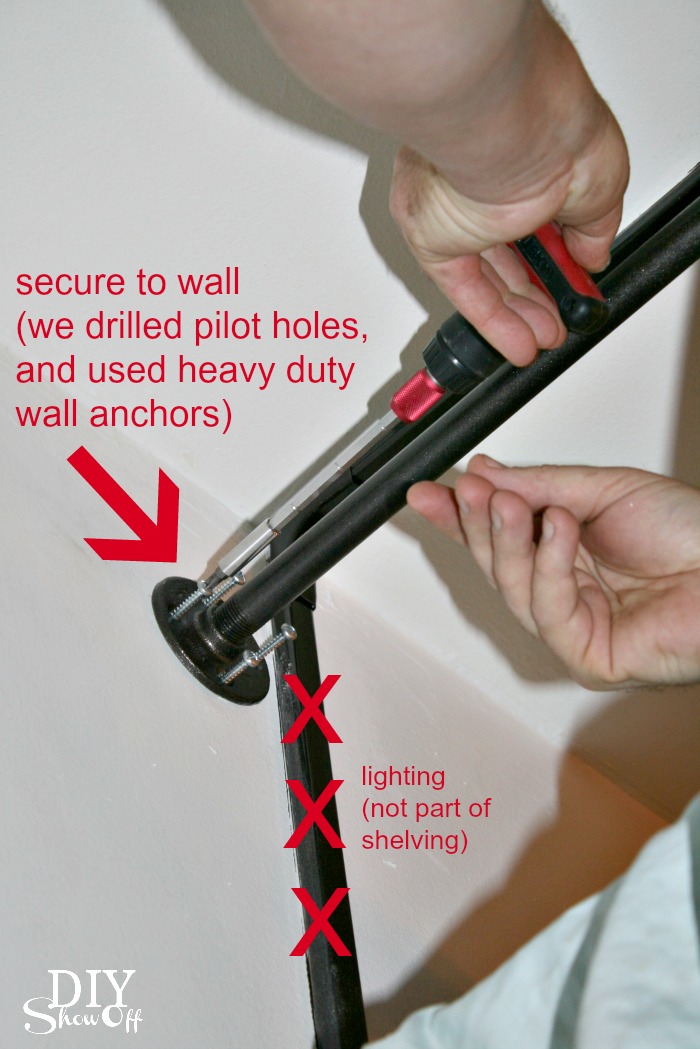
The top: securing the shelving unit. After the last shelf is in place, add the last three vertical lengths of pipe. Add an elbow to each one. Add a flange to each horizontal pipe piece and thread into the elbow. The flange should be touching the wall (threads will allow for adjusting). 

Using a pencil, mark the wall where screws (into the flange) need to go. Our walls are plaster so we drilled pilot holes and added heavy duty wall anchors. If you designed your shelf to line up with the wall studs…you’re good to go.  Screw flanges into place.securing pipe shelving to wall 
Sturdy. Beautiful! Ready to be stocked and decorated. industrial pipe shelving tutorial at DIYShowOff.com
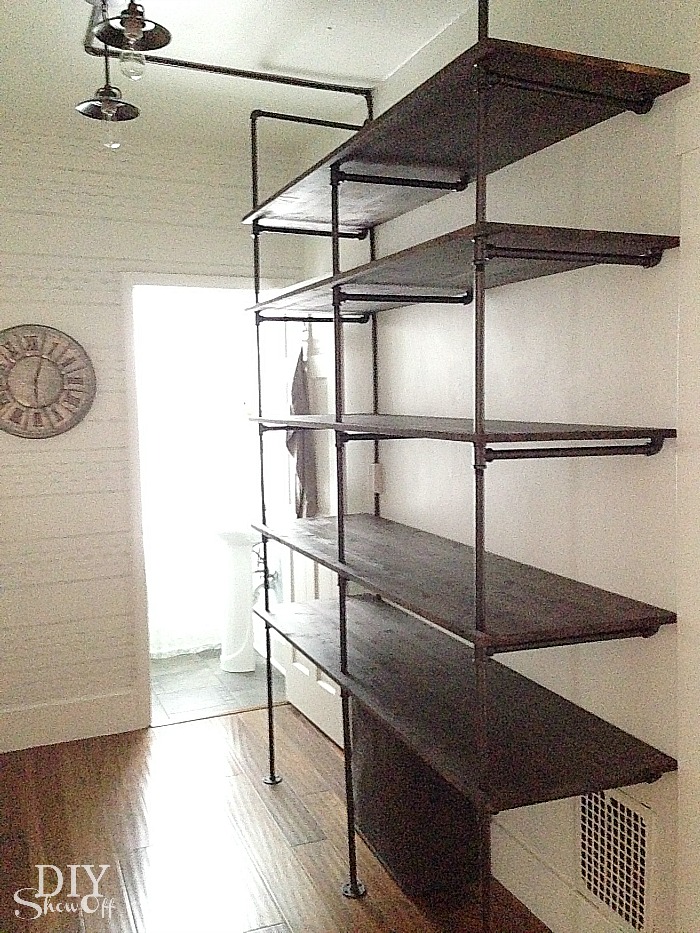
My cut pipe Lowe’s order was missing one of my top custom cut pipes so our shelving unit is only secured into the wall by the two outer pipe configurations and it’s still sturdy! But I do plan to add the top center piece to finish/secure it properly.

Final Reveal
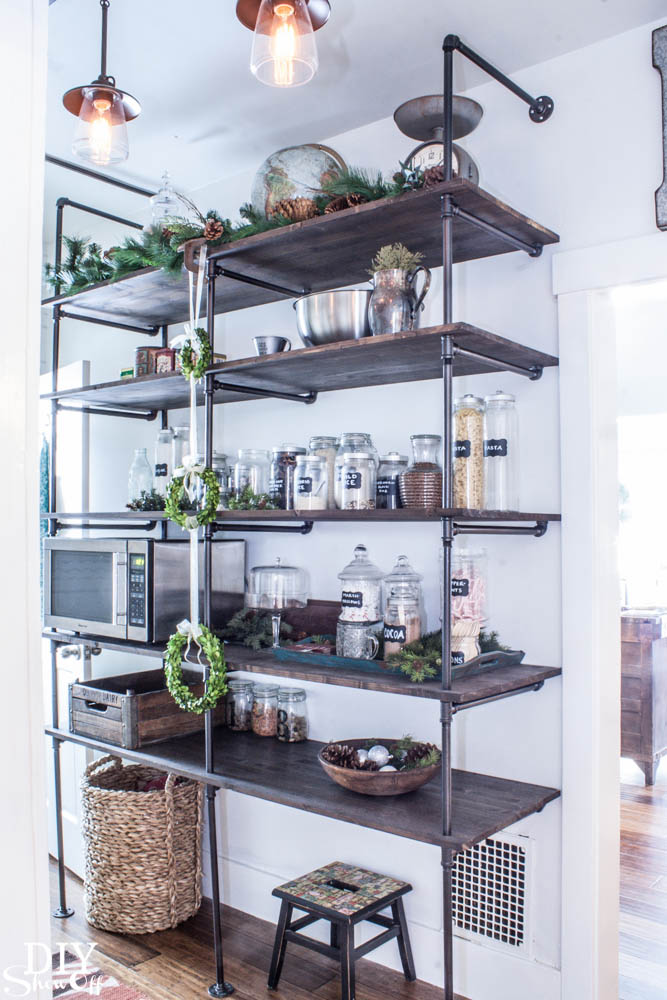
DIY pipe shelving unit in industrial style with wood shelves and black pipe frame for pantry storage

A custom shelving unit that fits the space perfectly and looks better than anything we could buy.
Industrial Pipe Shelving

What We Learned

  • design/planning is the hardest part

  • staining/sealing is most time-consuming

  • assembly easier than expected

  • fittings add up in cost

Whew! That sounds way too complicated and long, but I promise…I only wanted to include as many details as I could for your research into making your own.  I was so happy that it was easier than I anticipated. The hardest part – the design and again, by drawing it out one piece at a time, even that isn’t so complicated. Trust me, math is not one of my strengths. The most time consuming part – the staining/sealing or maybe it was removing the sticker goo. But the reward? A gorgeous custom shelving unit way better than any manufactured piece. Wouldn’t you agree?
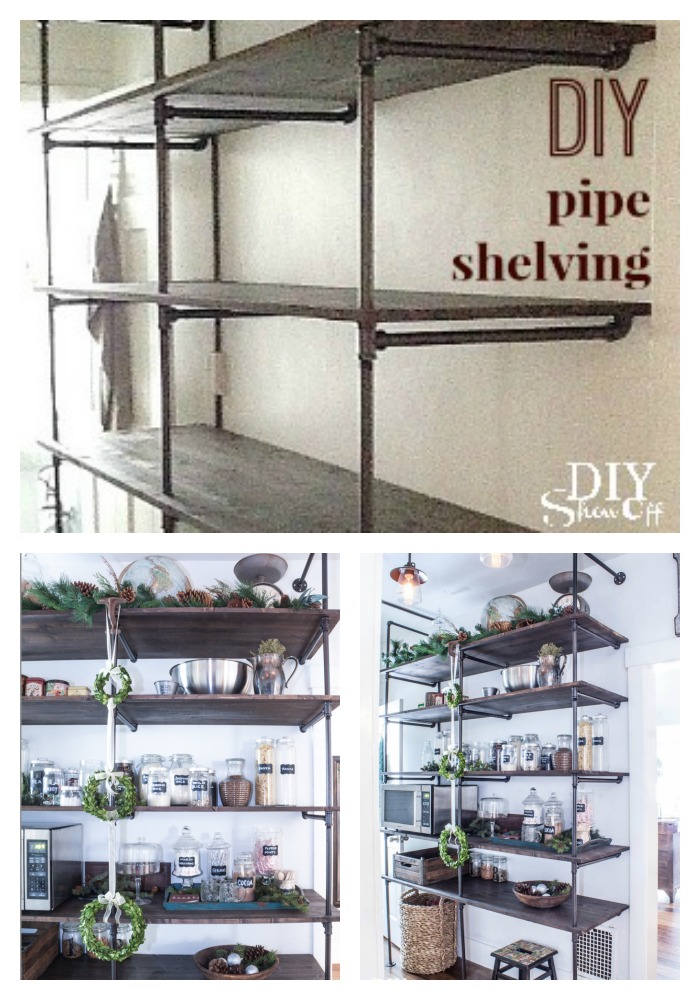
DIY pipe shelving at DIYShowOff

See the entire pantry before & after reveal here.

Have any questions? Let me know in the comments! Good luck!

Related Projects:

Pantry Before & After Reveal
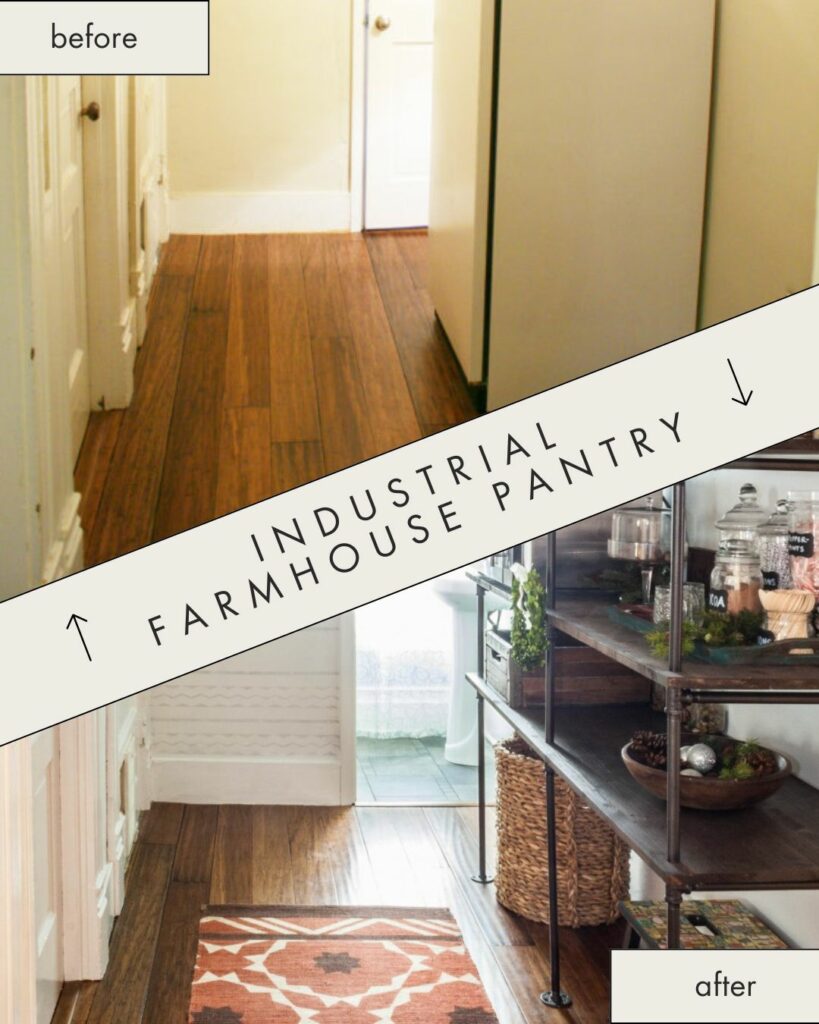
industrial farmhouse pantry makeover before and after

Painted Accent Wall

painted Shape Tape accent wall

Lighting Dilemma & Solution

farmhouse industrial pantry lighting

More DIY Projects:
Pantry Organization Ideas: DIY Shelving, Storage & Styling Tips

Organizing a pantry doesn’t have to mean a full renovation. With a few DIY projects and thoughtful storage solutions, you can create a space that’s both functional and beautiful. Here’s how we transformed ours step-by-step.DIYShowOff Open Pantry before and after makeover

Did that space actually grow larger and taller with the addition of shelves or is it just me?

Planning & Inspiration

When we removed a pantry closet in our kitchen to move the refrigerator (more on that here), it decreased valuable storage space. What were we thinking?! What to do? Well, after much thought, the solution was to utilize an odd room/hallway to create more storage space. Lucky for us, that space exists in our home right behind the kitchen. Jackpot! Kismet. Fate. Whatever – it was finally time to make it happen!
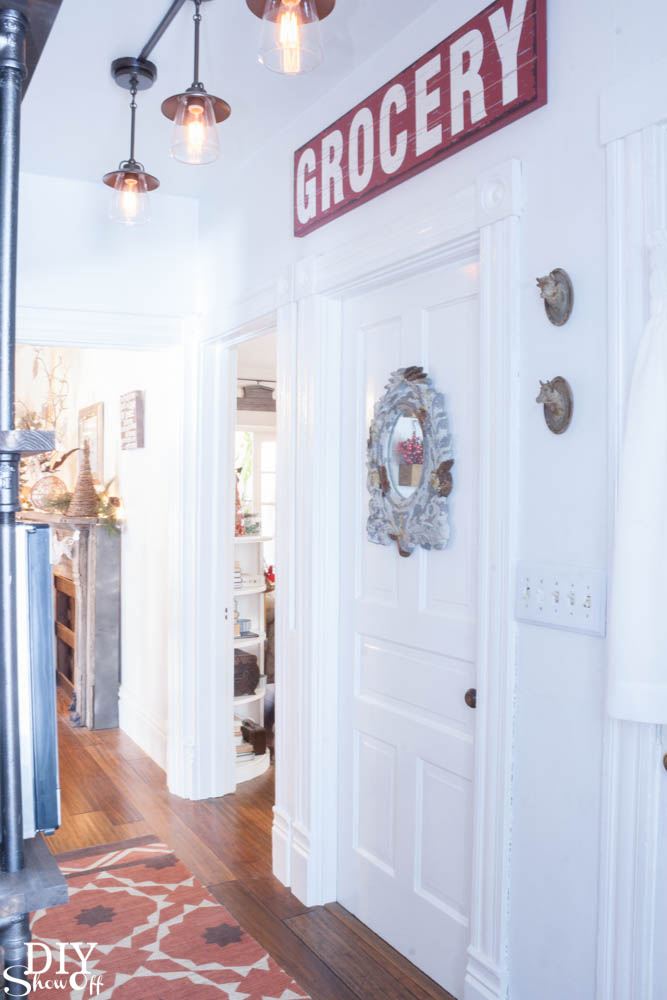
The space is bigger than a hallway but six (6!) doorways make it too awkward to be a room. There are doorways opening to the kitchen, dining room, living room, old cellar stairwell, enclosed porch (original front door) and half bathroom. We walk through that room a gazillion times a day.

It’s approximately 6 ft. wide and 9 ft. long with 9 ft. ceilings. Ever since previous owners enclosed the front porch and re-routed the front door, this poor former entryway has been feeling forgotten. Perfect for some custom DIY industrial pipe shelving and a new job description as ‘open pantry’. 

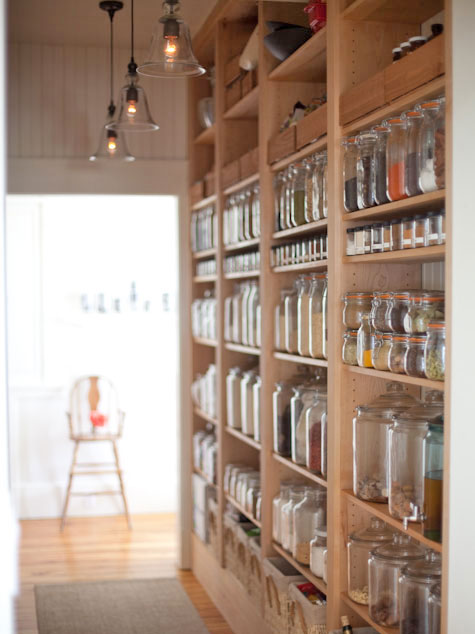
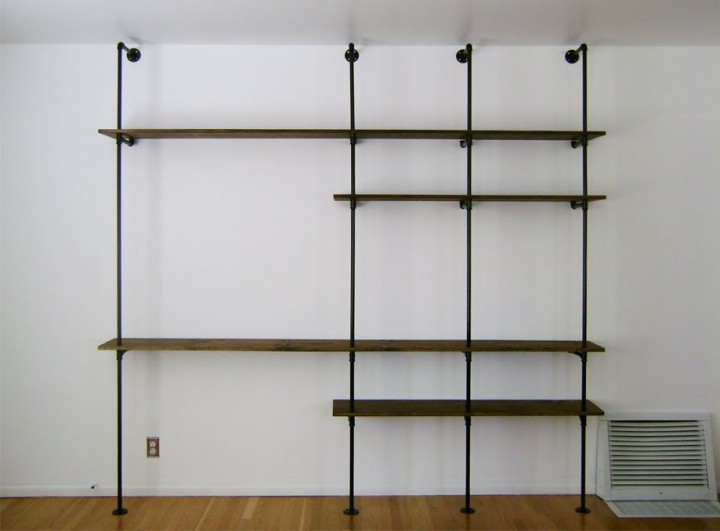
Where is all started: The idea to one day call this area a pantry formed three years ago after drooling over this awesome pantry by Emerson Made on Design Sponge.Emerson Made open pantry

And then falling in love with this cool pipe shelving I spied at the Brick House…pipe shelving at the Brick House

inspired the transformation of this space…

Before: Pantry Space

before – boring, useless, a lamp for lightopen pantry before

Pantry Organization Projects

DIY Shelving

We built custom industrial pipe shelving to maximize storage and fit the space perfectly.

DIY industrial pipe shelving unit in pantry with wood shelves and black pipe frame for storage and decor

Storage Solutions

  • baskets

  • jars

  • containers

Labeling + Organization

  • chalk labels

  • grouping items

Styling + Finishing Touches

Pantry Organization Tips

  • keep frequently used items accessible

  • use vertical space

  • mix storage + style

  • don’t overfill

Shop Pantry Organization Essentials

(affiliate links included)

Final Result

Now: a functional beautiful open pantry area…DIYShowOff Open Pantry

with new paint, new lighting and DIY industrial pipe shelving. It’s a small space…no room to get a photo straight on of the monstrous pipe shelves but plenty of walking room even with 20 inch deep shelving. I love storing dried goods in glass jars too. 

Before from another angle…pantry area before

After…isn’t the industrial pipe shelving unit awesome?!DIYShowOff Industrial Pipe Shelving

It’s super convenient with it’s location right off the kitchen.industrial farmhouse pantry makeover

The shelves were designed to fit the wall to ceiling and floor space perfectly and to accommodate our microwave as well as dried goods and baskets. I’m still messing with getting it all organized but I loooove how this once awkward unused space is now functional and pretty! Hurray!

More photos: Notice all of the doorways?DIYShowOff Pantryfarmhouse pantryfarmhouse pantry decor

Custom design was also handy when working around the heat vent…Kitchen Pantry

Why yes, that’s still a little Christmas hanging around for another week or so. Thanks for noticing!Industrial Pipe Shelving

farmhouse industrial pantry lighting

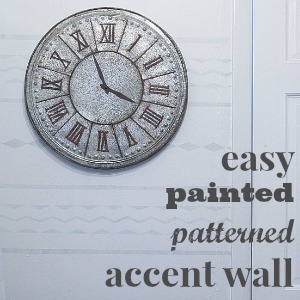
  • Paint – inexpensive way to brighten up a room lacking natural lighting. (accent wall tutorial) Base wall color: Valspar Cool Grey. 
  • Lighting – The Allen + Roth fixtures from Lowe’s were super affordable at around $57/ea. but electrical wound up costing more than I anticipated due to labor charges because there was no lighting whatsoever in the space from the get go and an outdated electrical outlet. (We did attempt DIY but it was over our heads and I’m not referring to just literally!) The exterior track/wiring adds to the industrial charm.
  • Pipe shelving – DIY means custom to fit our space and needs. Not a cheap DIY but still more affordable than purchasing two manufactured floor to ceiling shelving units. I’ll share how we did in in a couple of days! Check back!
  • West Elm Fiesta Tile Printed Jute Rug
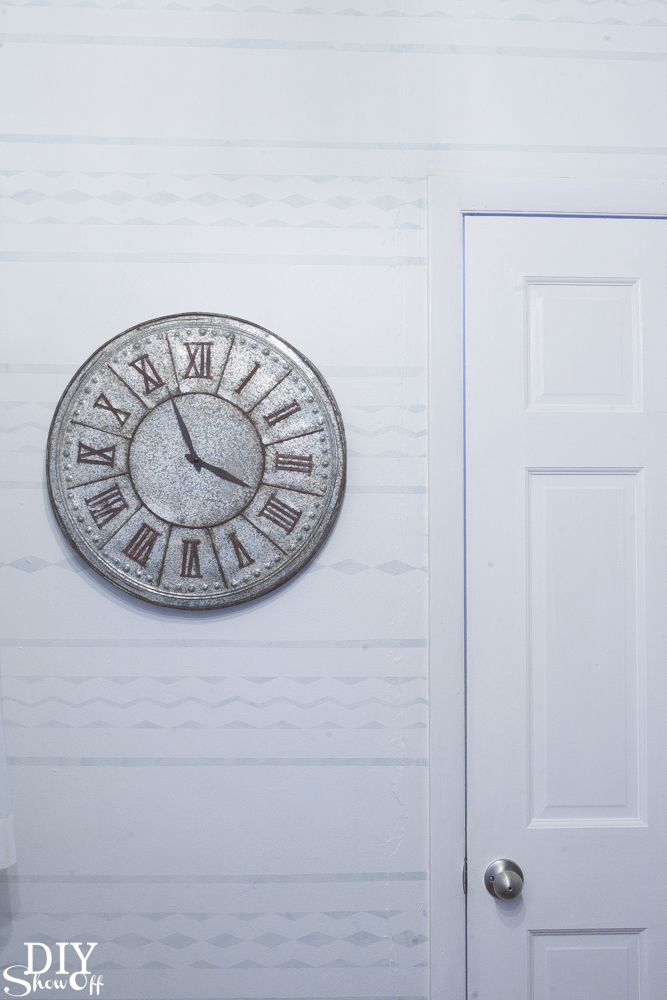
  • Flea Market Distressed Galvanized Metal Clock
  • IKEA Burken jars with lids
  • Large Seagrass Basket 
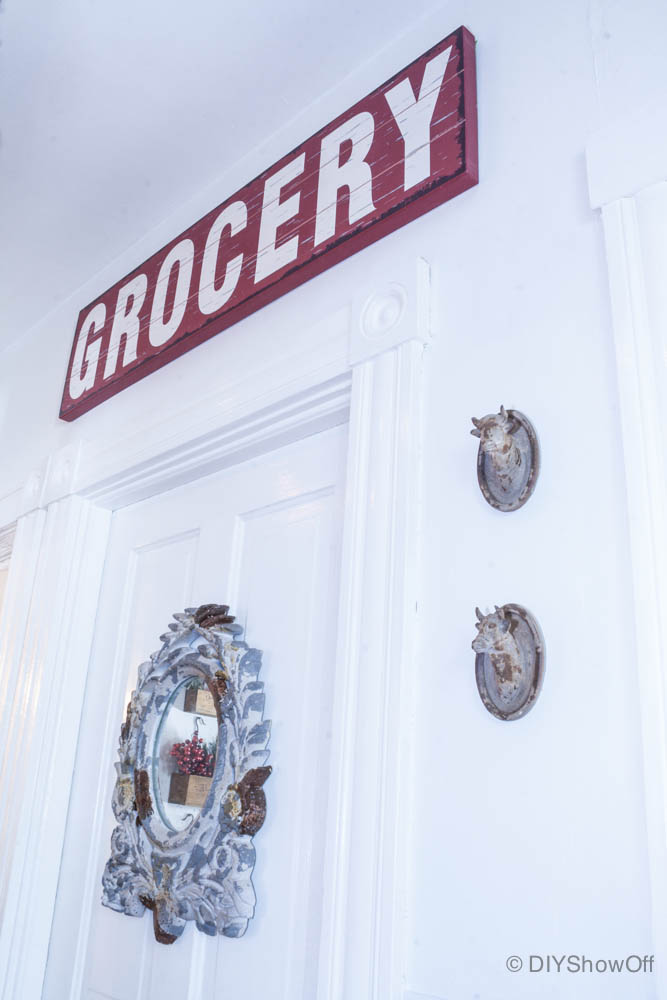
  • Petite Cow & Bull Cameo Plaques, set of 2
  • Grocery Sign 
  • Galvanized letter B – Hobby Lobby

DIY Pantry Makeover before and after

Related Posts

industrial farmhouse pantry makeover before and after

DIY INDUSTRIAL PIPE SHELVING TIPS & TUTORIAL

ACCENT WALL

easy painted accent wall

LIGHTING DETAILS

Industrial Pantry Light Details

Pantry Makeover Prep and #ReadyDoneClean Giveaway

This giveaway is now closed. And the winner is…winner1

winner2

Congratulations, Jessica! I’ll send you an email to get your mailing information!

We’ve been using an enclosed porch as a temporary pantry ever since we removed a closet from our kitchen but with warmer weather approaching, it’s going to need to be moved inside for better temperature control. So, it’s time to start considering a pantry makeover.

Inspiration: I have had this open pantry image from Emerson Made saved in my inspiration files forever.

Emerson Made open pantry

via Apartment Therapy

The ideal spot is the ‘room’ behind this back wall in the kitchen… farmhouse kitchen

It’s wider than a hallway and sits between our kitchen and living room and has FIVE doorways. Time to make the most of what has always been a waste of space. The freezer will be relocated to the basement.

open pantry before

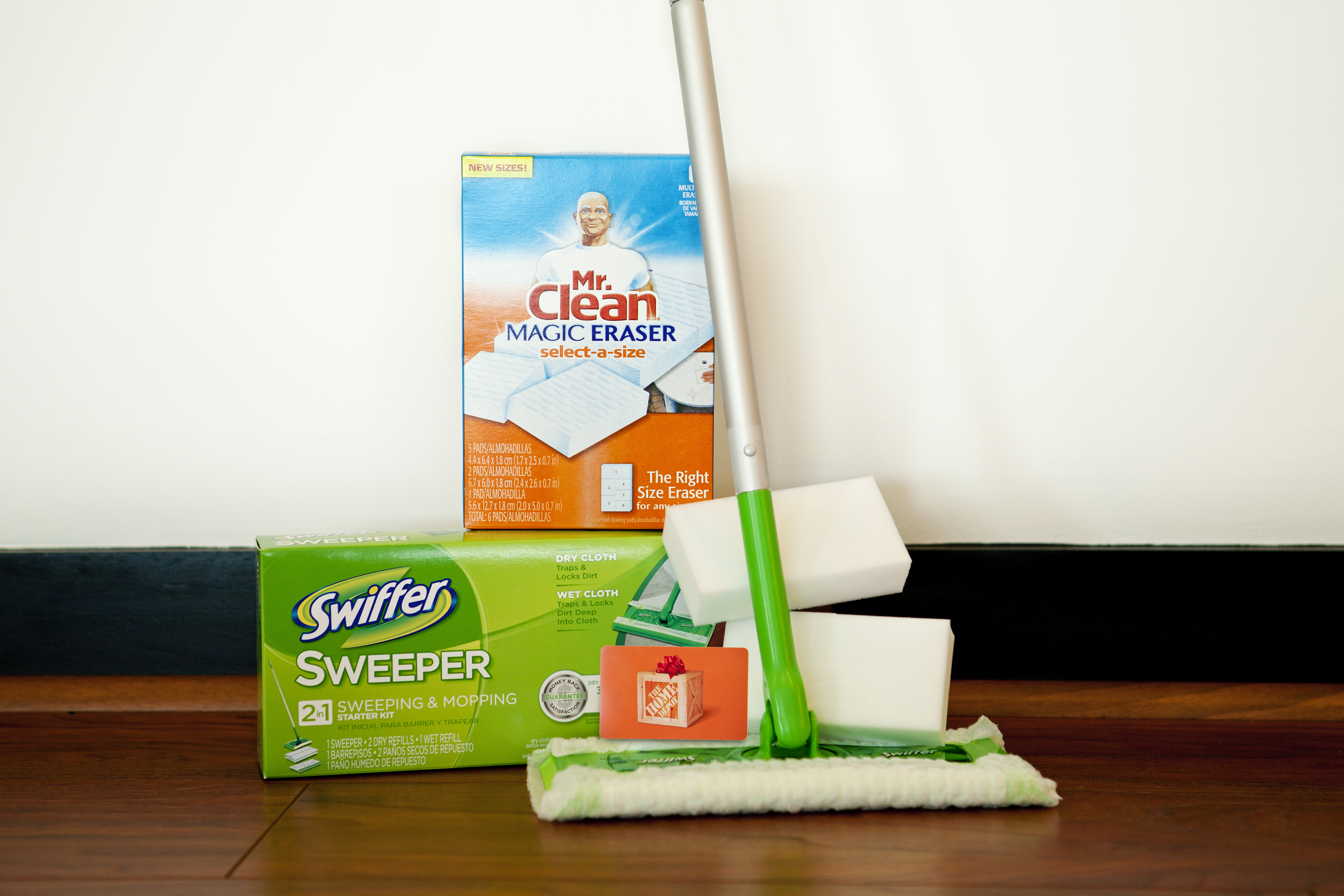
The first step in prepping for painting is to examine the walls and fill any holes, cracks or imperfections with spackling, letting it dry and sanding smooth. My Swiffer Sweeper is handy for cleaning up the spackling dust.

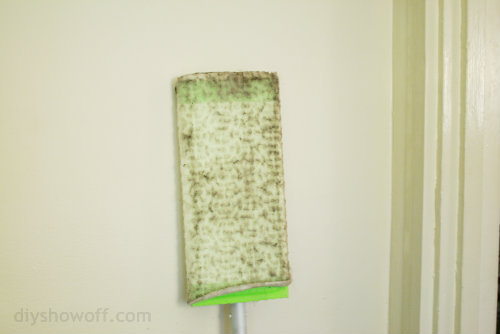
Then time for a little clean up. This area is so dark and un-used, meaning it often gets overlooked even though we walk through here nearly every day. Cleaning up before painting is important. Ever get cobwebs on your wet paint brush? No fun. A Swiffer Sweeper with a dry sweeping cloth works really well by attracting dirt and dust from virtually any surface, including walls, ceiling and baseboards with it’s 360 degree swivel head. With the long Swiffer Sweeper handle, I don’t even need a ladder to dust the 9 foot ceilings and corners.

I DO clean so I’m embarrassed by the dirt that accumulated in this dark, unused space. Yikes! This is just from the ceiling, walls and trim above 5 door frames. It’s not something you’ll want to paint over.

dirt and dust

I can’t believe it took cleaning this room for me to actually see the dirt. Gross! Next prepare for painting by taping off trim. Then paint!

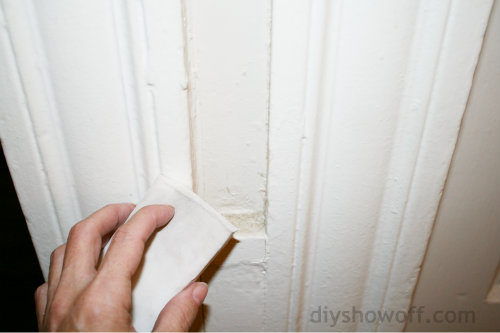
After painting, I use my Magic Eraser. It’s is so powerful that it removes more grime per swipe than the leading all-purpose bleach spray cleaner, and it has no harsh chemicals. I seriously have a basket full of Magic Erasers. With a husband who loves to cook, I use them all.the.time. for cleaning up spills and drips on white kitchen cabinets too.

magic eraser clean up

It’s going to feel so good to use this space, for it to be lighter and organized! I can’t wait!

You can find all of your painting supplies, including the Swiffer Sweeper and Mr. Clean Magic Eraser, at the Home Depot near you. Be sure to visit Paint Like a Pro at HomeDepot.com for a paint calculator and more great DIY painting and tips.

Home Depot P&G Prize Pack

Ready to paint?

Get ready. Get done. Get clean. Giveaway

#readydoneclean-giveaway

DIY Painting #ReadyDoneClean Prize Pack:

  • Swiffer Sweeper
  • Mr. Clean Magic Eraser Original
  • $50 The Home Depot gift card

(1) entry per person: Simply leave a comment below describing your next paint project to enter to win.  Giveaway starts today and ends March 1, 2013. Open to US and Canadian residents. Winner will be chosen randomly and announced shortly after.

*This review and giveaway is sponsored by The Home Depot and Proctor & Gamble, however opinion is my own and these are products I do purchase and use even when not sponsored. Read more about the DIY Show Off disclosure here